The Flood did not begin when the first rain fell. Before the fountains of the great deep were broken open, before Noah entered the Ark, and before the waters began to rise, the biblical account describes a world that had reached a terrible threshold. Humanity had multiplied. Violence had spread. Corruption had become pervasive. According to Genesis, God looked upon what mankind had become.
“And GOD saw that the wickedness of man was great in the earth, and that every imagination of the thoughts of his heart was only evil continually.”Genesis 6:5 · KJV
The language is unusually severe. Genesis does not describe an isolated war, a corrupt city, or the wickedness of a single ruler. It describes a condition that had spread through the human world. The final word of Genesis 6:5 is especially striking: continually.
The Three Charges
“The earth also was corrupt before God, and the earth was filled with violence. And God looked upon the earth, and, behold, it was corrupt; for all flesh had corrupted his way upon the earth.”Genesis 6:11–12 · KJV
Judgment Is Announced Before Judgment Is Executed
Then the narrative changes. God tells Noah what is coming. The Flood is therefore presented first as an announced judgment, not as an unexplained catastrophe.
“And God said unto Noah, The end of all flesh is come before me; for the earth is filled with violence through them; and, behold, I will destroy them with the earth.”Genesis 6:13 · KJV
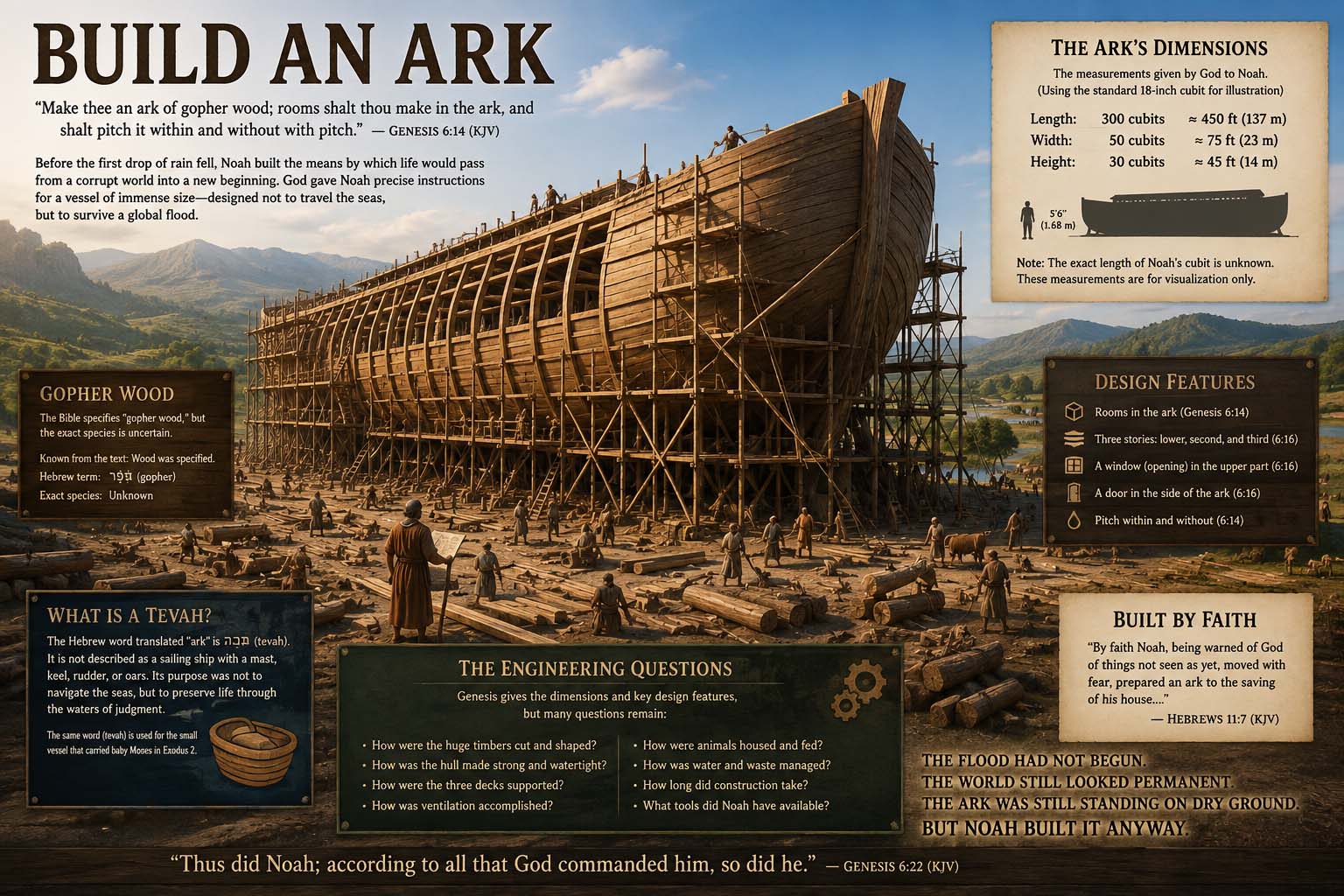
Noah is informed. Noah is instructed. Noah is given specifications. He is told who will survive with him and commanded to prepare provisions. Eventually an enormous vessel begins to take shape. The warning would not remain an invisible idea. It would become something that could be seen.
The 120 Years
“And the LORD said, My spirit shall not always strive with man, for that he also is flesh: yet his days shall be an hundred and twenty years.”Genesis 6:3 · KJV
This passage has been understood in more than one way. One interpretation reads the 120 years as a remaining period before the Flood. Another understands the statement primarily as a limitation associated with human longevity. Because this question deserves careful treatment, the chronology and competing interpretations are examined separately in 04 · The Final 120 Years.
Noah Was More Than a Builder
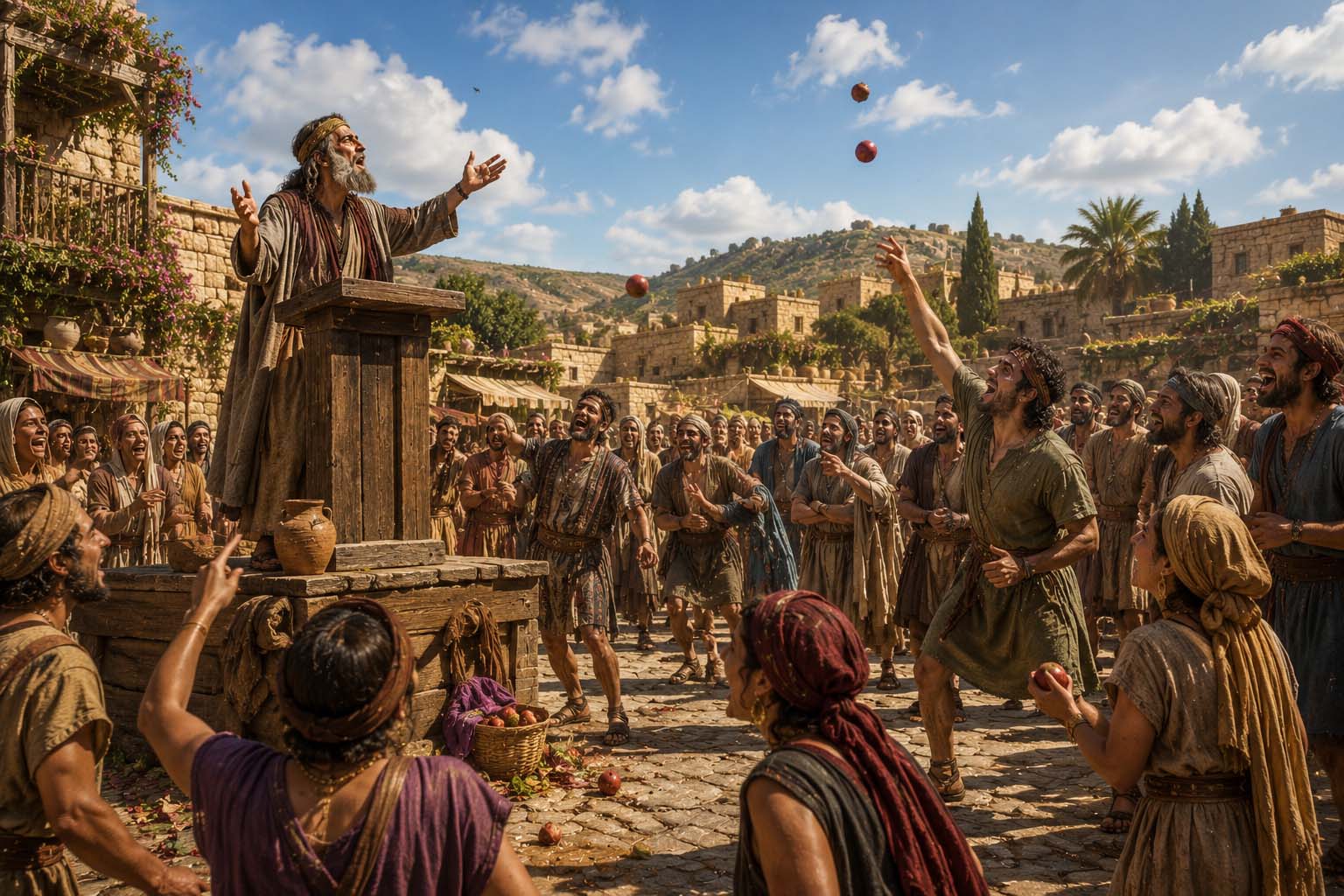
The New Testament adds an important description of Noah. Second Peter calls him a “preacher of righteousness.” Scripture does not preserve a transcript of Noah addressing crowds, nor does it tell us precisely how often, where, or to whom he preached. But the title itself means the biblical picture should not be reduced to a silent construction project.
“And spared not the old world, but saved Noah the eighth person, a preacher of righteousness, bringing in the flood upon the world of the ungodly;”2 Peter 2:5 · KJV
While the Ark Was Preparing
First Peter describes the days of Noah as a period in which the longsuffering of God waited while the Ark was being prepared. That gives the construction period a theological dimension beyond engineering. Preparation and patience existed before the catastrophe.
“…when once the longsuffering of God waited in the days of Noah, while the ark was a preparing…”1 Peter 3:20 · KJV
Life Continued as Normal
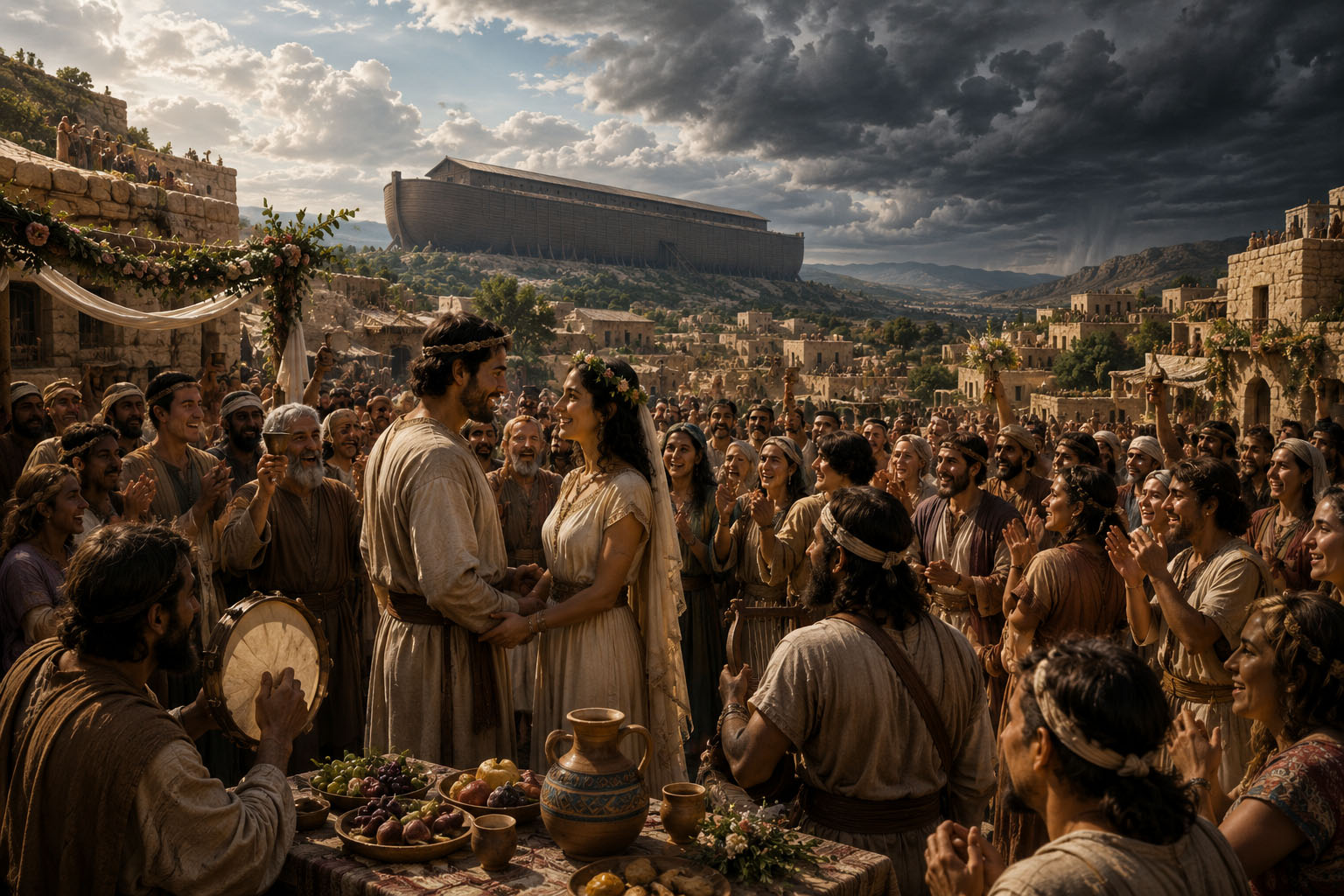
Jesus later described the generation before the Flood as eating, drinking, marrying, and giving in marriage until Noah entered the Ark. The picture is unsettling because ordinary human life continued while judgment approached.
“But as the days of Noe were, so shall also the coming of the Son of man be. For as in the days that were before the flood they were eating and drinking, marrying and giving in marriage, until the day that Noe entered into the ark, And knew not until the flood came, and took them all away…”Matthew 24:37–39 · KJV
People ate. People drank. Families formed. Plans were made. Daily life continued. Meanwhile Noah, whom Peter calls a preacher of righteousness, was preparing for a judgment that had not yet arrived.
They Went On Living
The final days before the Flood are not presented as a civilization frozen in terror, staring at the horizon and waiting for destruction. Jesus describes something more unsettling: ordinary life continued. People ate and drank. Men and women married. Families formed. Plans were made. Tomorrow was treated as though it would arrive much like yesterday.
A wedding could be planned for another season. A field could be planted for another harvest. A house could be built for children expected to grow old in it. Nothing about an ordinary morning necessarily announced that the First World was approaching its final days.
And somewhere within that ordinary world, Noah continued preparing.
The continued normality of the world could easily have been interpreted as evidence that nothing was going to happen. Another day passed without catastrophe. Then another. Yet from the perspective of the biblical narrative, every passing day did not make the warning less true. It brought the world one day closer to its fulfillment.
Hebrews gives the warning an emotional dimension that Genesis does not state in the same words: Noah was “moved with fear” after being warned about something that had not yet been seen.
“By faith Noah, being warned of God of things not seen as yet, moved with fear, prepared an ark to the saving of his house…”Hebrews 11:7 · KJV
Noah was therefore organizing his life around a future event for which the present world offered no completed example. The Ark was being prepared before the catastrophe provided visible proof that such preparation had been necessary.
What does a warning look like before the thing being warned about actually happens? Often, it looks like nothing has happened yet.
Could the First World Have Looked Geographically Different?
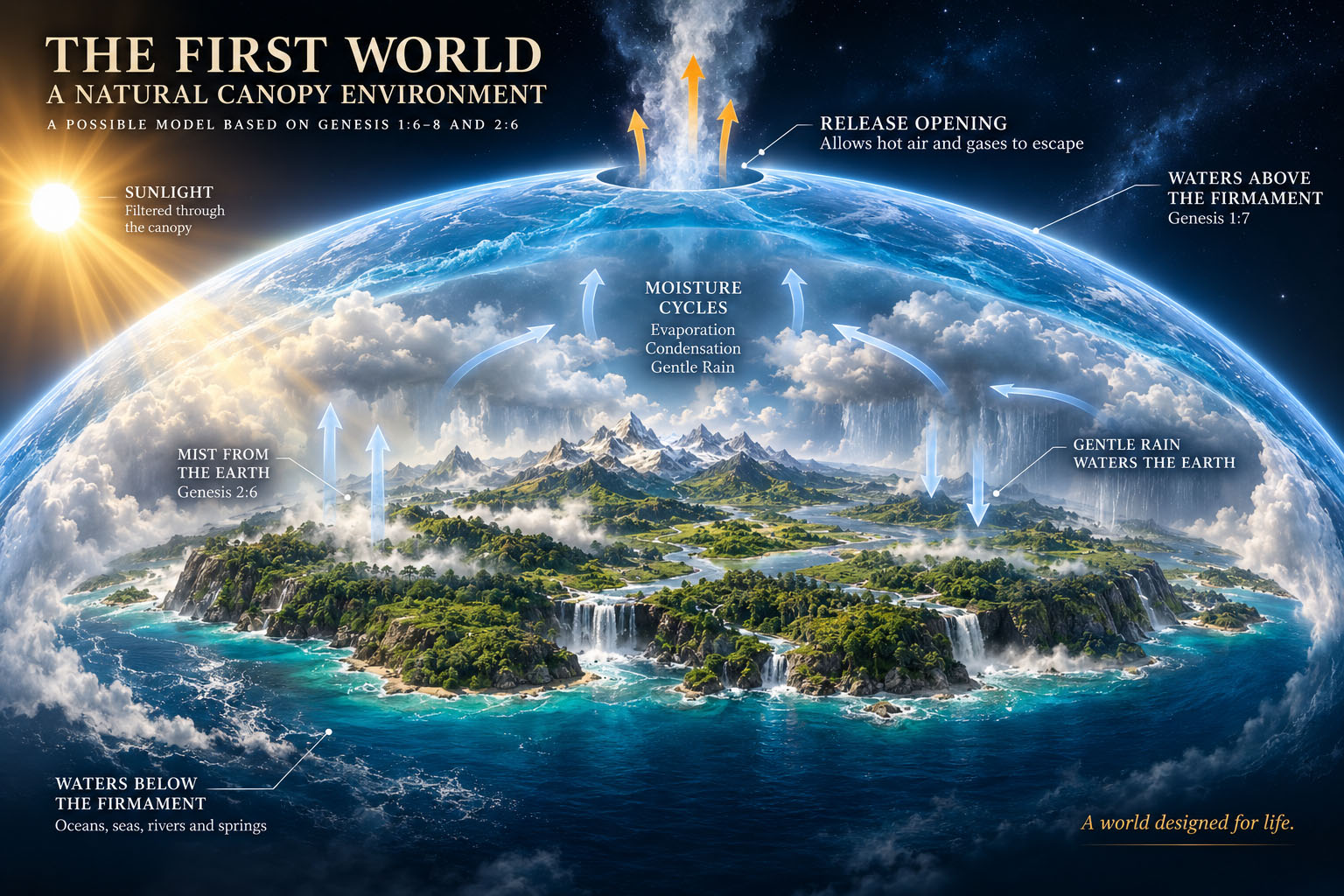
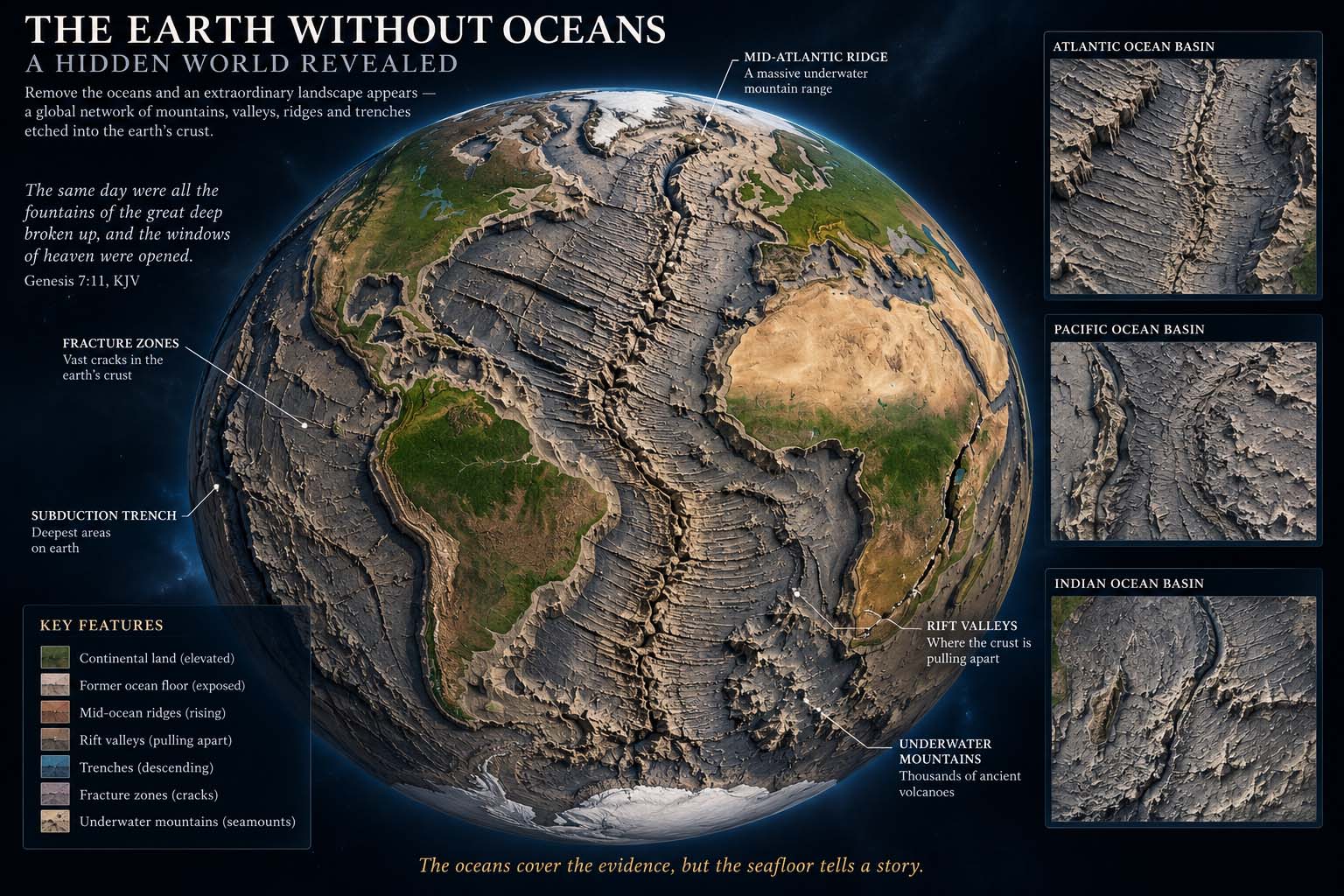
Genesis does not provide a map of the pre-Flood earth and does not state what percentage of its surface was covered by oceans. The museum therefore does not present a nearly oceanless pre-Flood world as established Scripture. It remains a reconstruction question.
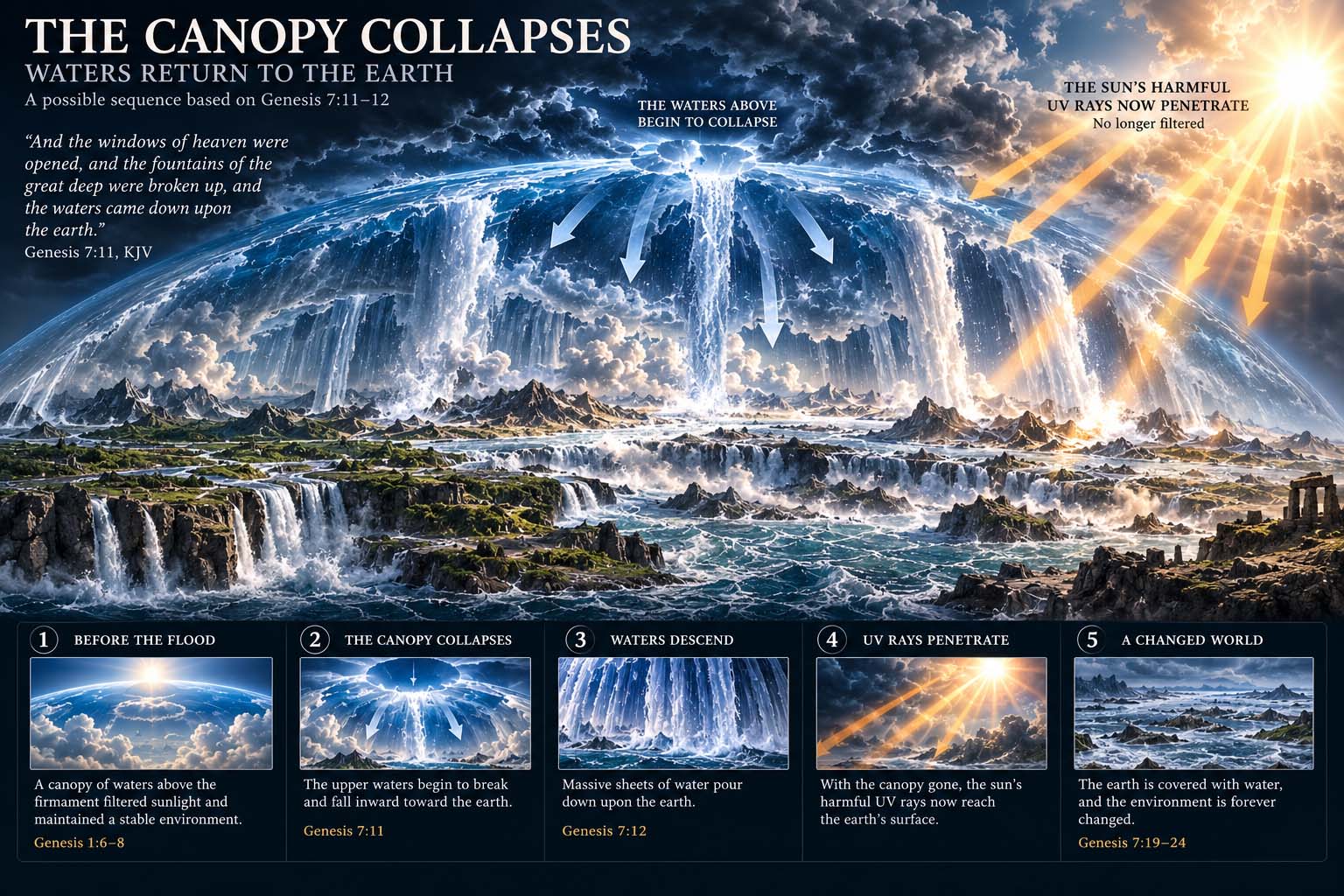
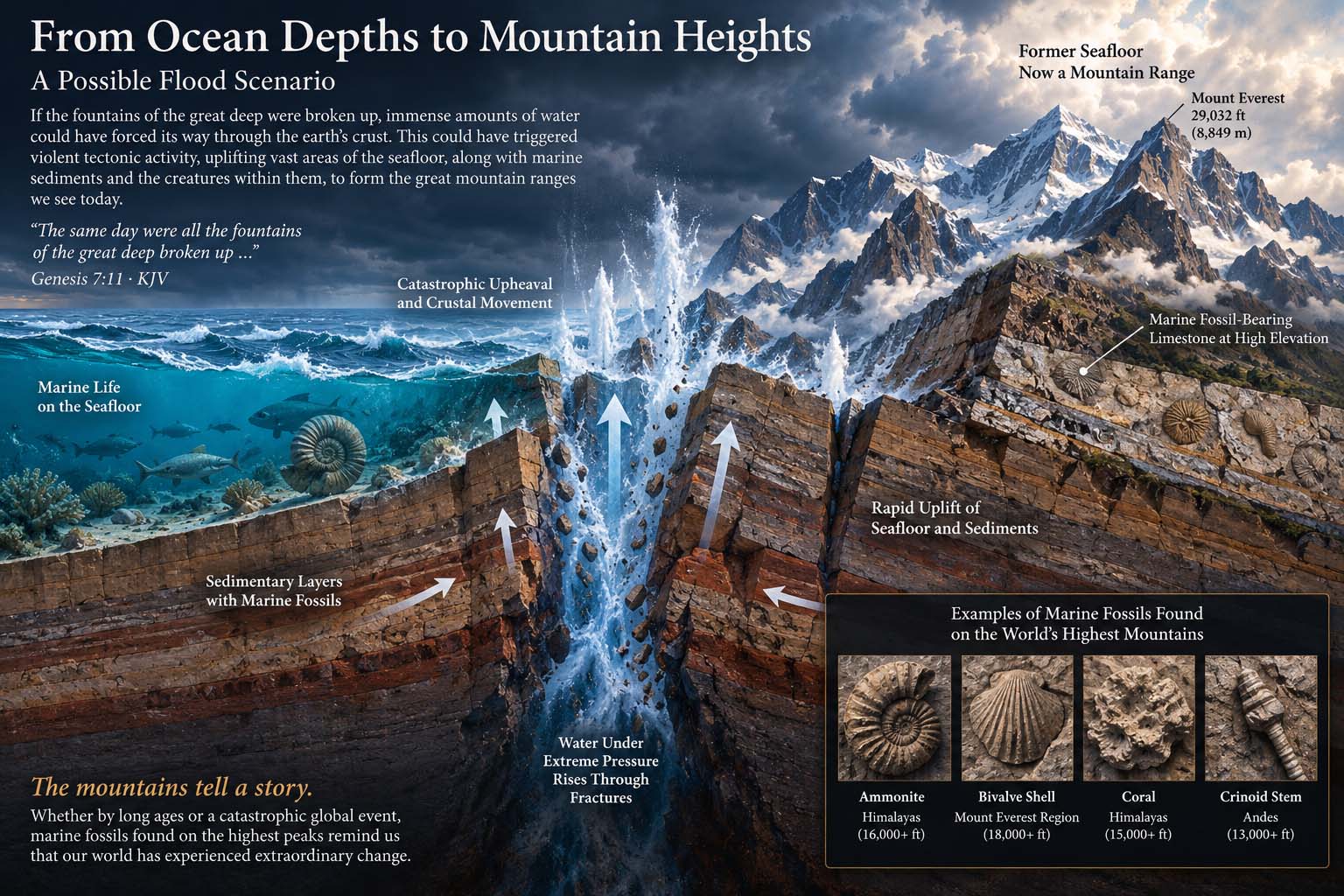
Nevertheless, the Flood account describes more than rain. When the catastrophe begins, Genesis says that “all the fountains of the great deep” were broken up and that the “windows of heaven” were opened. If the event involved major changes to the earth itself, the geography familiar to Noah may have differed substantially from the geography inherited by later civilizations.
“…the same day were all the fountains of the great deep broken up, and the windows of heaven were opened.”Genesis 7:11 · KJV
This possibility also raises a migration question explored elsewhere in the museum. If large regions now divided by oceans were once connected, more accessible, or separated by smaller bodies of water, some movements that appear formidable on a modern map might have occurred under very different geographical conditions. That remains a hypothesis, not a conclusion supplied directly by Genesis.
For the people receiving Noah's warning, however, the theological point is even more immediate: if the coming event had no adequate counterpart in their experience, the warning may have sounded impossible precisely because the world around them still appeared stable.
At What Point Would You Have Believed?
Imagine that no catastrophe had yet occurred. The sky still looked familiar. Daily life continued. The warning concerned something Hebrews calls “not seen as yet.” At what point would the warning have become convincing to you?
- When Noah first spoke?
- When construction of the Ark began?
- When the enormous vessel took recognizable shape?
- When provisions were gathered?
- When the animals came?
- When seven days remained?
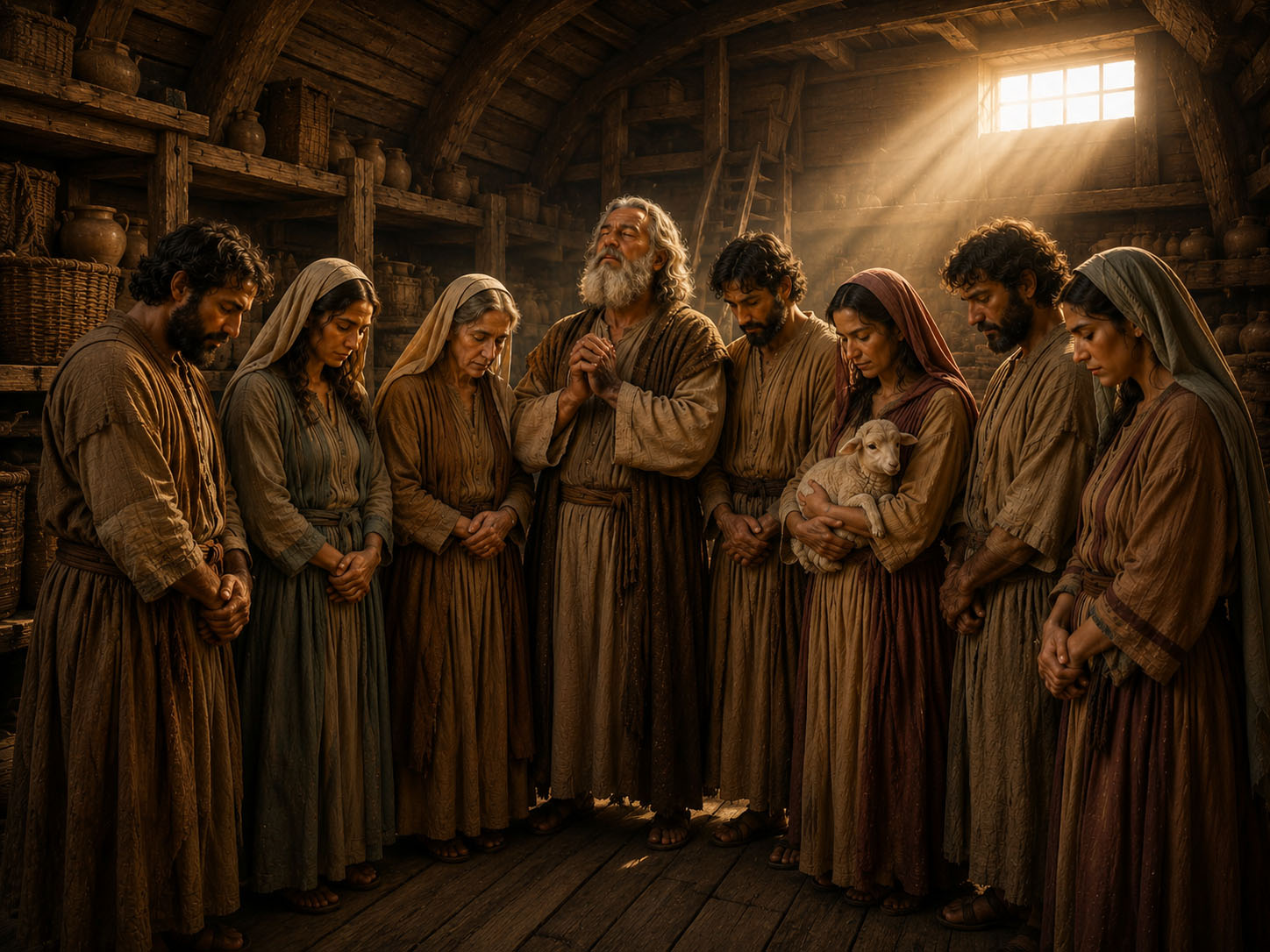
- When Noah and his family entered?
- When the door was shut?
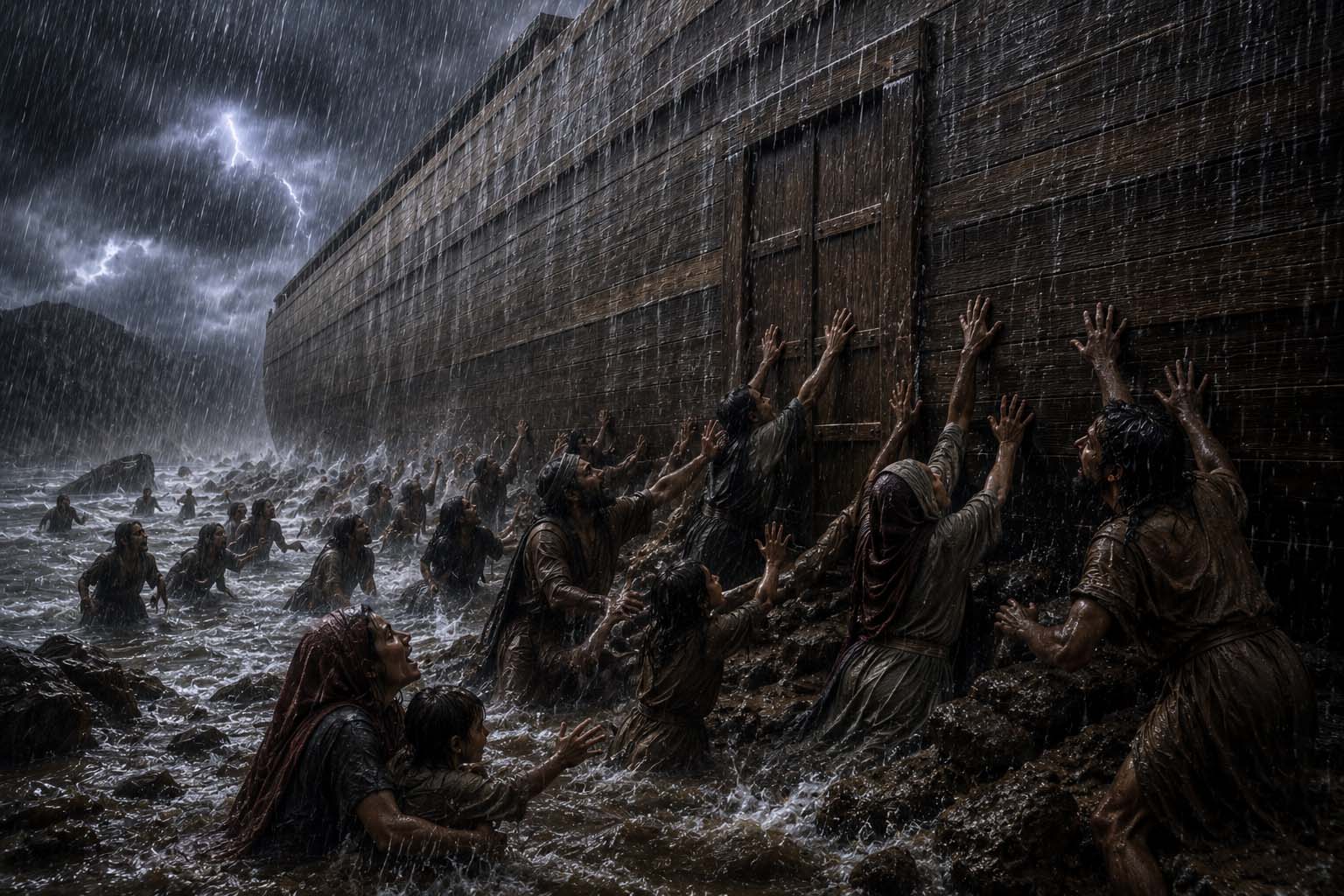
- Or only when the rain began?
The Flood gallery will now move through those moments one by one. With each step, another opportunity to dismiss the warning disappears.
The Flood Was Not Introduced as a Meaningless Disaster
Within Genesis, Noah stands inside a genealogy reaching backward through Lamech and Methuselah toward the earliest generations. The ancient Enochic tradition expands that idea even further by portraying knowledge of coming judgment as something communicated before Noah's generation reached the Ark.
This does not make every detail of 1 Enoch equivalent to Genesis. It does, however, show that ancient Jewish tradition remembered the pre-Flood catastrophe within a larger story of transgression, warning, judgment, and preservation.
1 Enoch: Judgment Before the Waters
1 Enoch is not part of the Protestant biblical canon. It is presented here as an important ancient Jewish witness to how the mysterious pre-Flood world was interpreted and expanded beyond the shorter account preserved in Genesis.
In 1 Enoch 6–8, the crisis is connected with the descent and transgression of the Watchers. They take human wives, giant offspring appear, and forbidden forms of knowledge spread. The narrative associates this period with violence, bloodshed, exploitation, weapons, occult practices, enchantments, and heavenly knowledge taught outside its proper boundary.
By 1 Enoch 9, the suffering of the earth has become a matter brought before heaven. Heavenly beings observe the bloodshed and corruption and appeal to God. This creates a striking literary parallel with Genesis 6, where God sees an earth that has become corrupt and filled with violence.
Enoch Becomes a Messenger of Judgment
In 1 Enoch 12–16, the Watchers themselves learn that judgment has been pronounced. They ask Enoch to present a petition on their behalf. Their request is not granted. Enoch instead becomes the bearer of the judgment back to them, including the destruction that will overtake their giant offspring and punishment that awaits the rebellious Watchers.
Noah Enters the Enochic Tradition
In 1 Enoch 106–107, Noah's unusual birth alarms his father Lamech. Lamech approaches Methuselah, who seeks Enoch's understanding. Enoch identifies Noah as Lamech's son and connects Noah with the coming destruction and preservation that will follow. In this tradition, knowledge of the approaching catastrophe is therefore portrayed as reaching across generations.
Jubilees: A World Unraveling
Jubilees is also non-canonical in the Protestant tradition. Jubilees 5 retells the pre-Flood crisis by connecting Watcher transgression, giant violence, bloodshed, human corruption, judgment, and Noah's preservation. The Flood is not reduced to punishment for a single offense. The picture is cumulative.
| Stage | The pre-Flood picture in Jubilees |
|---|---|
| Boundary Violated | The Watchers transgress the boundary associated with their mission and human women. |
| Abnormal Offspring | Giant offspring become part of the expanding crisis. |
| Violence Spreads | Bloodshed, destruction, and conflict intensify. |
| Human Corruption | The wrongdoing is not confined to the Watchers. Humanity itself becomes implicated in the corruption. |
| Creation Affected | The narrative portrays disorder spreading through the created world. |
| Judgment Pronounced | Destruction is decreed against the corrupted pre-Flood order. |
| Noah Distinguished | Noah is preserved as the world around him comes under judgment. |
That final distinction closely echoes the turning point in Genesis: “But Noah found grace in the eyes of the LORD.” (Genesis 6:8, KJV)
Jubilees later continues the story beyond the Flood. Jubilees 10 preserves a tradition in which destructive spirits associated with the dead giants trouble Noah's descendants. That later tradition belongs principally to the post-Flood story and will be cross-referenced in The New World rather than treated as part of the canonical Flood account.
The Warning Moves From Prophecy to Preparation
The Enochic and Jubilees traditions place warnings of judgment within generations that precede Noah's final preparations. By Noah's lifetime, the warning takes on another dimension. According to the New Testament, Noah is remembered as a “preacher of righteousness,” and Genesis presents him carrying out the extraordinary command to prepare the Ark.
The sequence is therefore deliberate in this exhibit: Enoch first, then Noah. Earlier warnings establish the approaching judgment. Noah's generation then sees preparation for that judgment becoming physically visible.
The Ark Was Rising in Plain Sight
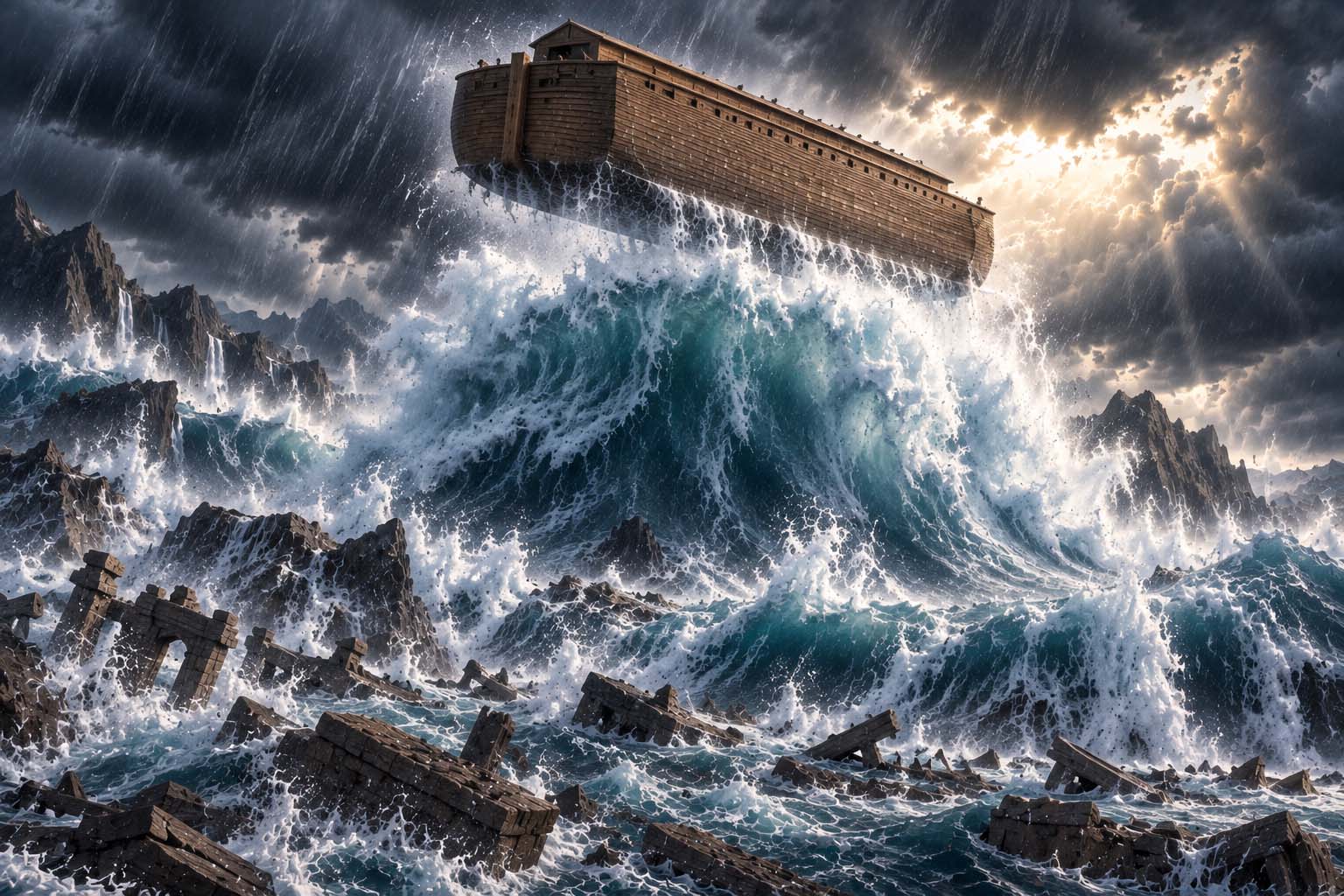
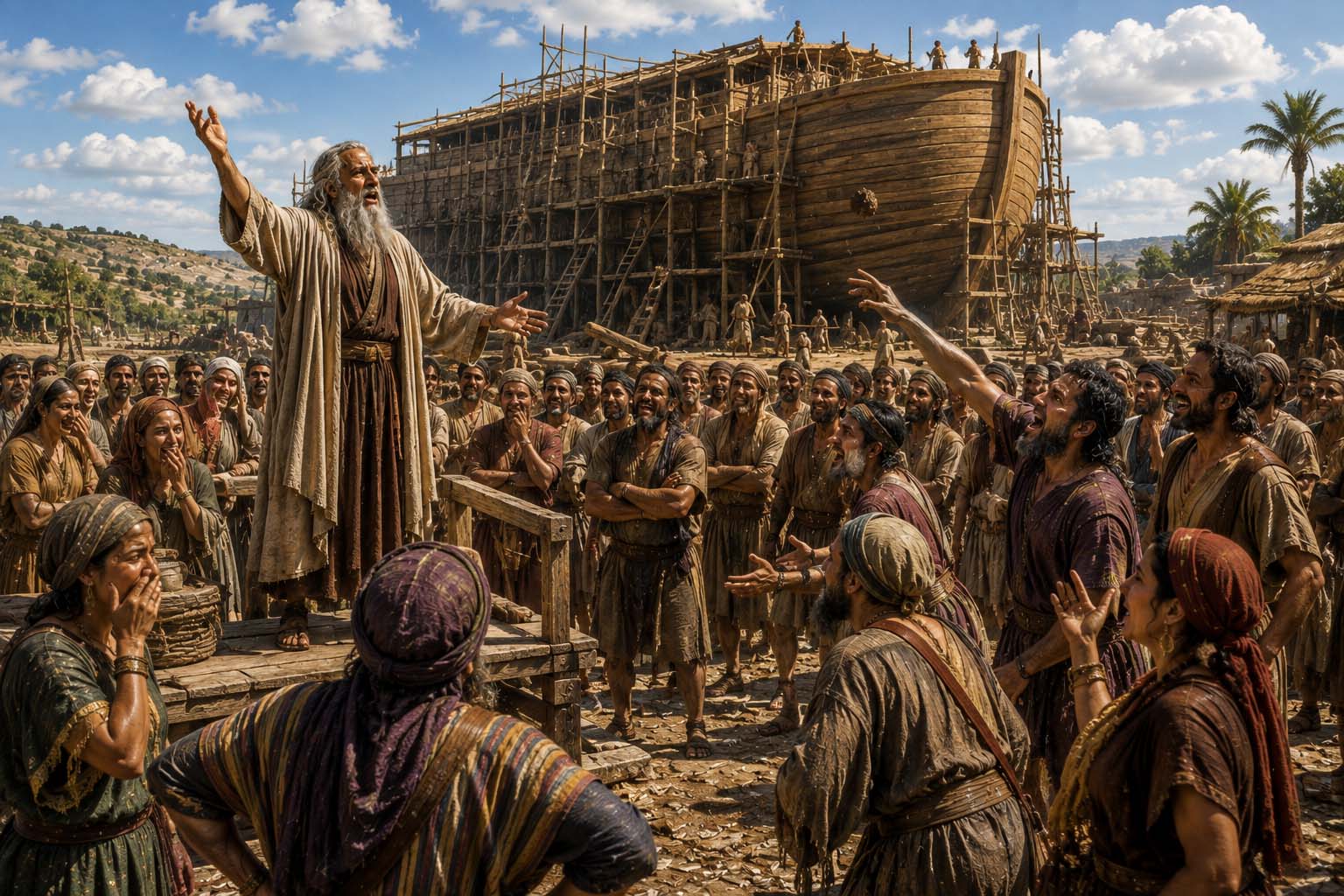
For Noah's generation, the warning was no longer only a message about something that might someday occur. A massive vessel was taking shape before their eyes. Timber was being cut, joined, raised, and assembled. The work continued long enough for the Ark itself to become a visible declaration that Noah believed the judgment was real.
The New Testament calls Noah a “preacher of righteousness.” Scripture does not preserve the words of his sermons, so the museum does not invent them. But the combination of Noah's preaching and the construction of the Ark creates a powerful biblical picture: warning was being spoken while preparation was being made.
The Ark Was Being Built in a World That Still Looked Safe
Imagine the contrast. The sky is clear. Families are gathering. Children are growing. Work continues. People plan marriages, harvests, journeys, and futures. Nothing in the ordinary appearance of the day seems to demand panic.
Yet nearby, an enormous Ark continues to rise.
Every beam placed into position makes Noah's warning more visible. Every completed section turns an unseen future judgment into a physical object standing in the present. The structure itself becomes difficult to ignore, even if its meaning is dismissed.
And still, another sunrise comes without rain.
That delay could easily have strengthened ridicule rather than belief. To those who rejected the warning, the continued beauty and stability of the world may have seemed to prove Noah wrong. But within the biblical narrative, the absence of immediate judgment did not cancel the warning. It meant the appointed time had not yet arrived.
What Would You Have Seen?
You would not yet have seen a flooded world. You would have seen ordinary life, a beautiful sky, a man preaching righteousness, and an enormous vessel being built for a catastrophe that had not yet arrived.
Would the Ark have looked like evidence of judgment, or evidence of one man's foolishness?
What These Writings Do, and Do Not, Establish
| Genesis | God sees widespread wickedness, corruption, and violence. Judgment is pronounced. Noah is warned and instructed. Noah finds grace. The Flood comes. |
| New Testament | Noah is called a preacher of righteousness. God's longsuffering waits while the Ark is prepared. Jesus describes ordinary life continuing until Noah enters the Ark. |
| 1 Enoch | Expands the tradition with the Watchers, giants, forbidden knowledge, heavenly appeals concerning bloodshed, Enoch's warning to the Watchers, and traditions surrounding Noah and the approaching catastrophe. |
| Jubilees | Expands the tradition through Watcher transgression, giant violence, corruption, judgment, Noah's preservation, and later traditions concerning destructive spirits after the Flood. |
Museum distinction: Genesis and the canonical biblical texts establish the scriptural record presented here. 1 Enoch and Jubilees are displayed as ancient Jewish witnesses that preserve expanded traditions surrounding the pre-Flood world. They are not used here to replace Genesis or to blur the distinction between canonical Scripture and later ancient literature.
What Would a Warning Look Like Before the First Raindrop?
If the Flood had not yet begun, what evidence would the surrounding population have had that Noah's warning was true? There would have been no flooded cities, no submerged mountains, and no waters covering the landscape. There was a warning, a man later called a preacher of righteousness, and eventually an enormous Ark under construction.
At what point does a warning become evidence?
The rain had not begun.
The deep had not broken open.
The door had not closed.
There was still time.
The absence of judgment did not mean the warning had failed. It meant the warning period had not yet ended.