Archaeological Collection · Collection V
Ancient Anomalies
Artifacts That Invite a Second Look
Physical discoveries that preserve ancient knowledge, raise unusual questions, or resist easy explanation.
A Message from the Curator
When the Artifact Refuses to Be Ordinary
Every museum contains objects that fit comfortably into the story we already know. This collection is about the objects that make us stop. A wooden vessel survives where wood should have disappeared. A mechanism reveals a level of astronomical calculation and mechanical design that seems startling for its age. Ancient texts emerge from caves after centuries of silence. Metal, stone, writing, engineering, and craftsmanship sometimes preserve details that force us to look more closely at the people who made them and the world in which they lived.
What interests me about an anomaly is not the opportunity to exaggerate it, but the opportunity to investigate it. The most fascinating question is often the simplest one: what is actually here? We can examine the artifact, its material, its dimensions, its archaeological setting, the circumstances of its discovery, and what specialists have learned from it. Only then should we ask what it might mean. Some mysteries become clearer under careful examination. Others become deeper. My hope is that this collection gives you the evidence first, while preserving the sense of wonder that begins when an ancient object tells us something we did not expect to hear.
David PinterCurator, Archoseum
Anomalies & Unexplained Artifacts
The Artifact Collection
Begin with the object itself. Each exhibit separates what is physically known from interpretation and places the discovery within the museum's biblical framework.
An Interactive Archaeological Journey

Discovery - The Dead Sea Scrolls
Qumran, Israel
Step into an interpretive reconstruction of the traditional discovery story. Follow the wandering sheep toward the limestone cliffs, enter the cave, examine the manuscripts, then emerge to the Dead Sea landscape below.
Begin the Discovery Interactive reconstruction · ambient audio is optional · archaeological finds and manuscript identifications are distinguished from interpretive scenery.EXPLORE THE COLLECTION
Ancient Anomalies
Open an exhibit below to examine unusual artifacts and discoveries, their archaeological context, documented evidence, competing interpretations, and unresolved questions.
01Exhibit 01Pesse CanoeDrenthe · Netherlands

Pesse Canoe
A Vessel from the Earliest World
The Pesse Canoe is an extraordinary survivor because it preserves something that normally disappears almost completely from the archaeological record: ancient woodworking and watercraft technology. It was discovered near Pesse in the province of Drenthe, Netherlands, in 1955. The vessel was fashioned from a single Scots pine trunk by deliberately hollowing and shaping the timber into a narrow dugout. The surviving canoe measures approximately 2.98 meters, or 9.8 feet, in length. Its preservation gives us direct physical evidence that ancient people selected suitable timber, worked a substantial tree trunk, shaped a usable hull, and understood the practical value of waterways for movement, fishing, hunting, and transport.
Within the museum's biblical framework, the canoe raises a broader question about the antiquity of watercraft knowledge. Genesis 6:14-16 presents large-scale wooden vessel construction as already known in the world of Noah, including structural compartments and waterproofing with pitch. The Pesse Canoe cannot be connected archaeologically to Noah, the Ark, or the Flood, and this exhibit does not make that account. Its importance is more careful but still compelling: a genuine wooden watercraft survived from a cultural context that archaeology itself regards as extremely early. Whether it belongs within a biblical Pre-Flood world or an early Post-Flood population cannot currently be demonstrated, so the museum keeps that placement explicitly open.
| Artifact Type | Dugout wooden watercraft |
| Discovery Location | Pesse, Drenthe, Netherlands |
| Discovered | 1955 |
| Material | Scots pine |
| Construction | Single tree trunk, deliberately hollowed and shaped |
| Surviving Length | Approx. 2.98 m / 9.8 ft |
| Current Location / Custodian | Drents Museum, Assen, Netherlands (museum object no. 1955-VIII-2) |
| Authenticity | Confirmed archaeological artifact |
| Archaeological Classification | Mesolithic |
| Museum Classification | Undetermined, possible Pre-Flood / early Post-Flood candidate |
| Biblical Connection | Contextual. Genesis records sophisticated wooden vessel construction before the Flood. |
| Evidence Rating | Strong artifact / Biblical placement undetermined |
A genuine, intentionally fashioned wooden dugout canoe was recovered at Pesse and is preserved by the Drents Museum.
Its exact role in the daily life, travel patterns, and cultural setting of its makers is reconstructed from archaeological context.
Its precise place within a biblical chronology cannot be established from the object alone.
Contextual rather than direct. It demonstrates genuine ancient watercraft technology, a capability relevant to the world described in Genesis.
02Exhibit 02Gilgamesh Flood TabletNineveh · Mesopotamia
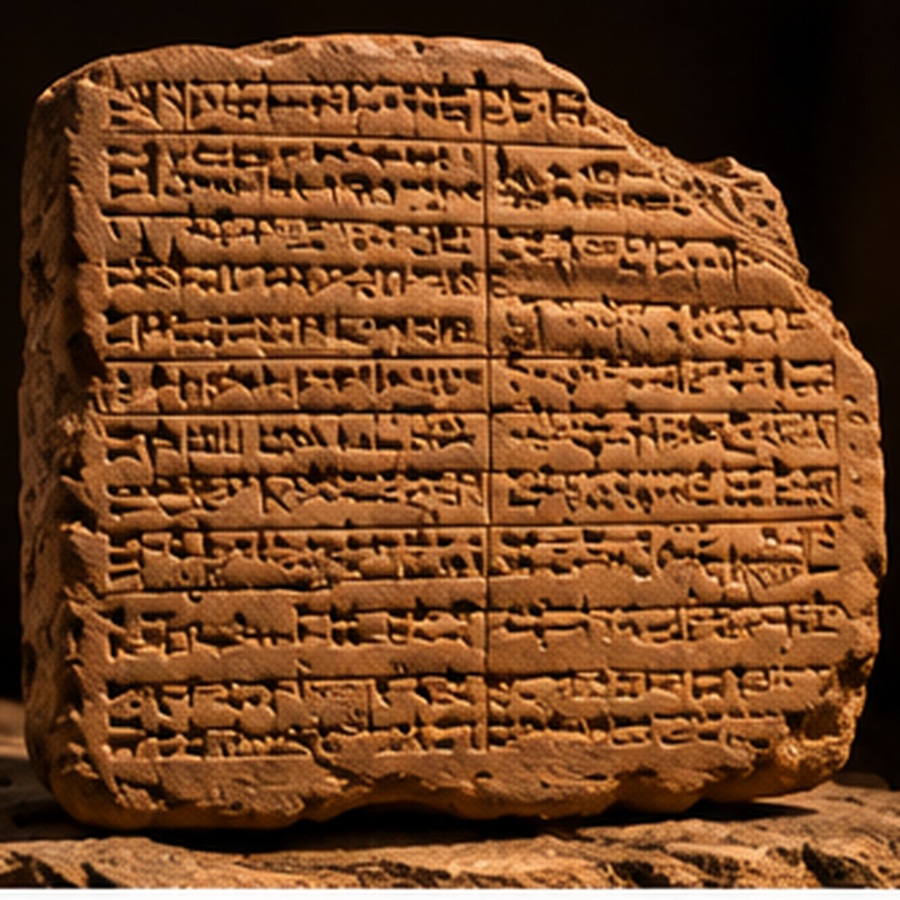
Gilgamesh Flood Tablet
A Memory of the Great Flood Preserved in Clay
The object commonly called the Gilgamesh Flood Tablet is Tablet XI of the Epic of Gilgamesh, preserved on a clay tablet from the Library of Ashurbanipal at Nineveh. The text recounts how Utnapishtim survived a catastrophic flood after receiving a divine warning. The narrative includes the construction of a great vessel, the preservation of living creatures, overwhelming waters, the eventual resting of the vessel, the release of birds, and a sacrifice after the catastrophe. Whatever conclusion is reached about the literary relationship between Mesopotamian tradition and Genesis, the physical artifact is remarkable because an ancient Near Eastern civilization committed a detailed great-flood tradition to clay.
For a Bible-centered museum, the similarities to Genesis 6-9 deserve careful comparison, but the differences matter just as much. Genesis presents Noah, his family, divine judgment upon human wickedness, preservation of animal life, and God's covenant after the waters recede. The Mesopotamian account reflects a different theological world and preserves details belonging to its own culture. The museum therefore treats the tablet as a Post-Flood written memory of a accounted earlier catastrophe, not as an artifact physically recovered from Noah's Flood. One reasonable historical question is whether traditions carried by dispersed peoples could preserve altered memories of a shared catastrophe, but that remains an interpretation rather than a fact established by the tablet itself.
| Artifact Type | Cuneiform clay tablet fragment |
| Findspot | Kouyunjik / ancient Nineveh, in the Library of Ashurbanipal |
| Material | Clay |
| Text | Tablet XI of the Epic of Gilgamesh, the Flood story |
| Central Subject | Survival of a catastrophic flood after divine warning |
| Birds Released | Dove, swallow, and raven in the Mesopotamian narrative |
| Current Location / Custodian | British Museum, London, England (museum no. K.3375) |
| Authenticity | Confirmed ancient artifact |
| Museum Classification | Post-Flood written memory of a Flood tradition |
| Biblical Connection | Strong thematic parallels to Genesis 6-9, without proving direct literary dependence or identity of events |
| Evidence Rating | Strong artifact / historical interpretation under continued study |
The tablet is genuine, comes from the royal library at Nineveh, and contains the Flood episode of the Gilgamesh epic.
The historical relationship among the Gilgamesh tradition, other Mesopotamian flood traditions, and Genesis continues to be studied.
Texts alone cannot establish whether different flood traditions descend from one historical catastrophe, multiple regional floods, literary borrowing, or some combination.
Directly relevant as an ancient Near Eastern flood tradition that can be compared carefully with Genesis 6-9.
Regional Collection 06 examines Gilgamesh, Humbaba, the apkallu and Mesopotamian Flood memory together.
OPEN REGIONAL COLLECTION 06 →03Exhibit 03Nebra Sky DiscGermany
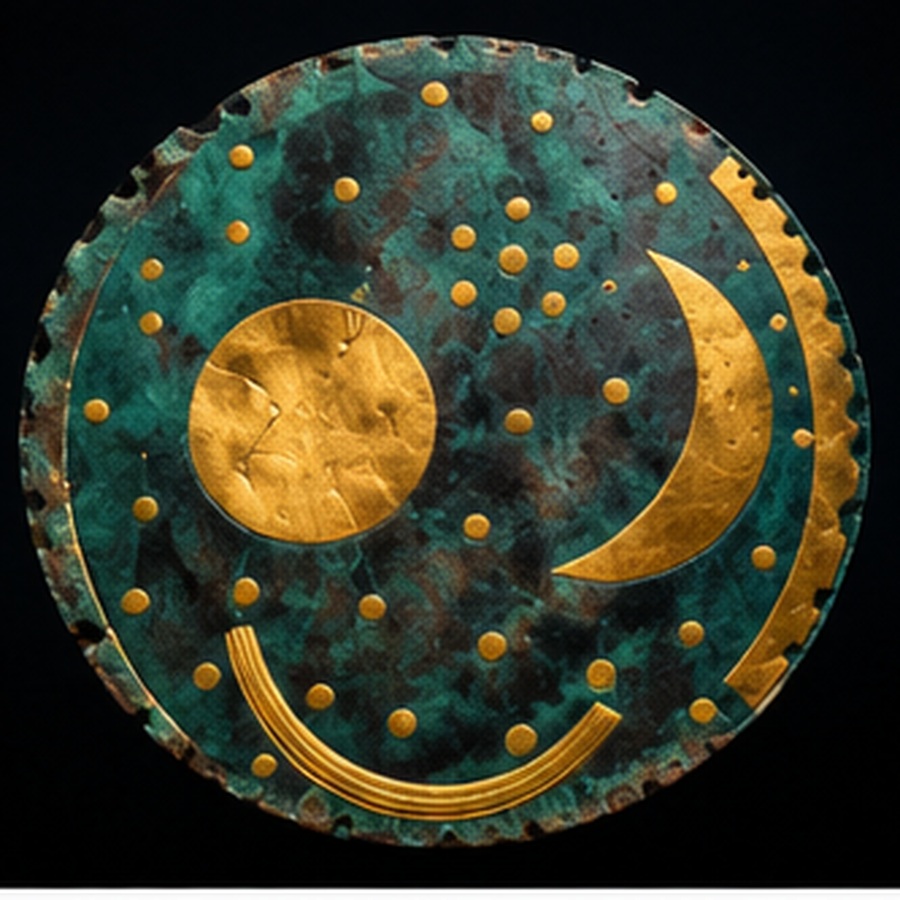
Nebra Sky Disc
Knowledge Written in the Heavens
The Nebra Sky Disc is one of the most remarkable surviving representations of celestial observation from ancient Europe. The bronze disc is approximately 32 centimeters, or 12.6 inches, across and carries gold applications interpreted as a crescent Moon, a full Moon or Sun, and a field of stars. One cluster is widely identified with the Pleiades. Additional golden arcs were added during the object's history, showing that the disc was modified rather than created once and left unchanged. Researchers have interpreted the horizon arcs as references to the changing rising and setting positions of the Sun through the year, while another curved feature has been interpreted as a celestial or solar boat.
The object is compelling because it combines metallurgy, symbolic representation, and potentially practical astronomical knowledge in a single artifact. Scientific analysis also shows that its materials participated in long-distance exchange networks, indicating communication and movement of valuable resources. Within our museum framework, the Nebra Sky Disc provides a vivid example of early Post-Flood societies observing the heavens with care and preserving that knowledge materially. Genesis 1:14 describes the heavenly lights as serving for signs, seasons, days, and years. The disc does not prove a biblical connection, but it shows an ancient culture closely attending to precisely those recurring celestial cycles.
| Artifact Type | Bronze celestial disc with gold applications |
| Discovery Location | Mittelberg hill near Nebra, Saxony-Anhalt, Germany |
| Material | Bronze with gold inlays/applications |
| Diameter | Approx. 32 cm / 12.6 in |
| Celestial Features | Crescent Moon, full Moon or Sun, stars, horizon arcs, and a later curved element often interpreted as a celestial boat |
| Pleiades | A seven-star grouping is commonly identified with the Pleiades |
| Current Location / Custodian | State Museum of Prehistory, Halle (Saale), Germany |
| Authenticity | Confirmed archaeological artifact |
| Archaeological Classification | Early Bronze Age |
| Museum Classification | Early Post-Flood astronomical knowledge |
| Biblical Connection | Contextual, particularly the biblical association of heavenly bodies with seasons and the measurement of time |
| Evidence Rating | Strong artifact / function partly interpreted |
The disc is authentic, made of bronze and gold, and intentionally depicts organized celestial forms.
The exact astronomical rules encoded by the disc and the ritual significance of its imagery remain scholarly interpretations.
We do not know exactly who possessed it, how widely its knowledge was understood, or whether its primary use was observational, calendrical, ceremonial, or a combination.
Contextual. It illustrates sophisticated observation of the heavens in an ancient society, consistent with humanity using celestial cycles to mark seasons and time.
04Exhibit 04Shigir IdolUral Region · Russia
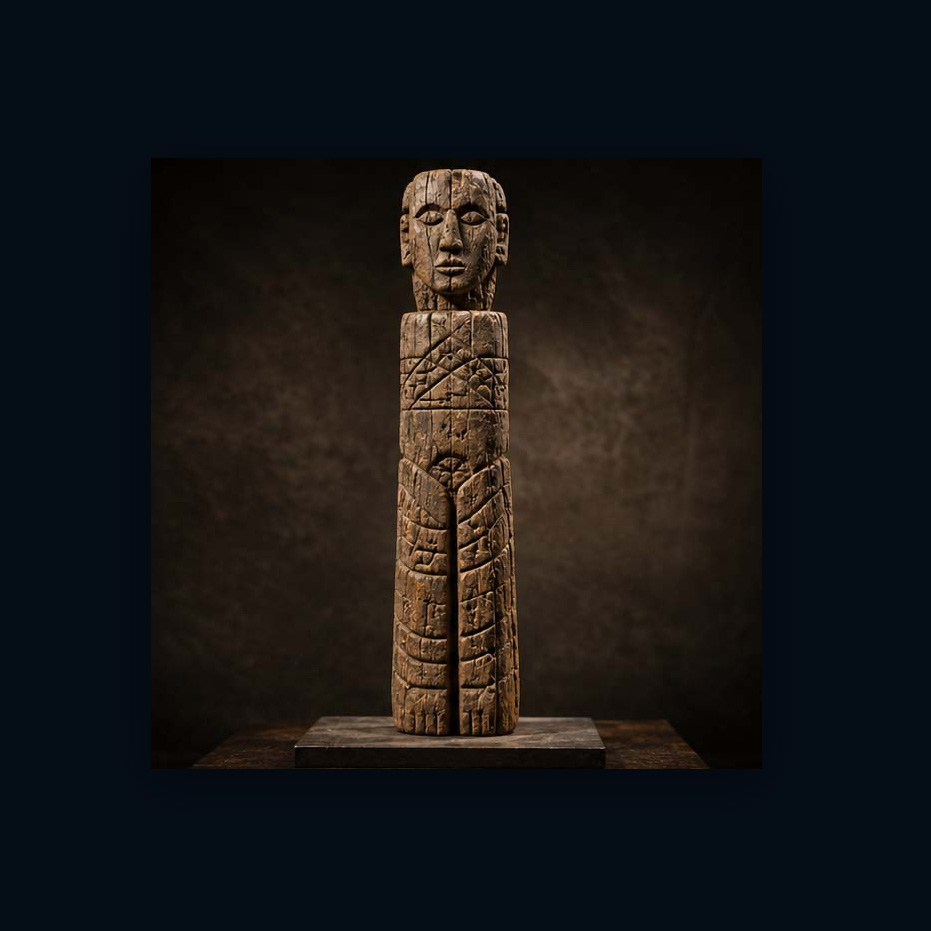
Shigir Idol
A Message Whose Language Has Been Lost
The Shigir Idol is unlike almost anything else in the collection. Recovered in 1890 from the Shigir peat bog in the Ural region of Russia, it was carved from larch wood and covered with an elaborate program of geometric markings and stylized humanlike faces. Its survival is remarkable because monumental wooden sculpture normally disappears through decay. The chemistry of the peat protected the timber, leaving researchers with an exceptionally rare example of ancient woodworking and symbolic expression. The surviving reconstruction stands about 2.8 meters, or 9.2 feet, high, while the original figure is thought to have exceeded five meters, or more than 16 feet.
The greater mystery is the meaning of its carved imagery. Zigzags, chevrons, horizontal bands, faces, and other repeated geometric forms divide the figure into a deliberate visual system. They may represent spiritual beings, ancestors, territories, cosmological levels, warnings, stories, or concepts no longer recoverable. Researchers can record every cut in the wood, but the people who understood the visual language left no surviving key. Within our biblical framework, the museum leaves the idol's placement open rather than forcing a conclusion. It may represent a Pre-Flood cultural tradition, an early Post-Flood population, or another ancient context whose relationship to biblical chronology cannot be established from the object alone.
| Artifact Type | Monumental carved wooden figure |
| Discovery Location | Shigir peat bog, Ural region, Russia |
| Discovered | 1890 |
| Material | Larch wood |
| Surviving Height | Approx. 2.8 m / 9.2 ft |
| Estimated Original Height | More than 5 m / 16 ft |
| Decoration | Multiple faces, zigzags, chevrons, bands, and geometric motifs |
| Current Location / Custodian | Museum of History and Archaeology of the Urals, Sverdlovsk Regional Museum of Local Lore, Yekaterinburg, Russia |
| Authenticity | Confirmed archaeological artifact |
| Archaeological Classification | Mesolithic wooden sculpture |
| Museum Classification | Undetermined, possible Pre-Flood / early Post-Flood candidate |
| Evidence Rating | Strong artifact / symbolic meaning unknown |
05Exhibit 05Olmec Colossal HeadsMexico
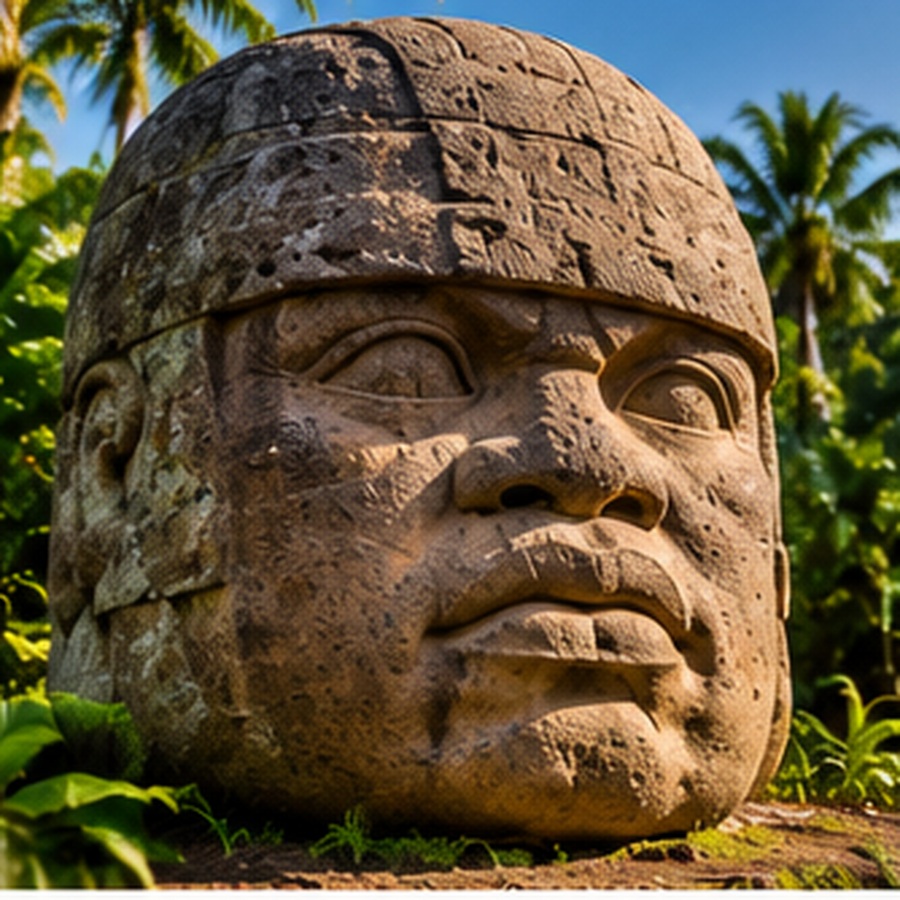
Olmec Colossal Heads
Portraits in Stone
The Olmec colossal heads are among the most visually commanding monuments of ancient Mesoamerica. Seventeen examples are generally recognized from sites including San Lorenzo, La Venta, Tres Zapotes, and Santiago Tuxtla. Carved from massive blocks of volcanic stone, principally basalt, the heads depict individualized human faces beneath distinctive helmetlike headgear. They are not simply repetitions of a single generic face. Differences in facial structure, expression, and headdress support the interpretation that they portrayed specific high-status individuals, very likely rulers or other prominent people.
The engineering problem is just as fascinating as the portraits themselves. Large basalt masses had to be obtained from geological sources, moved across significant distances, delivered to major ceremonial centers, and carved into monumental human likenesses without modern cranes, trucks, or powered cutting tools. None of that makes their construction impossible. The Olmec unquestionably accomplished it. The responsible question is how labor, transport routes, rafts, rollers, sledges, earthworks, and human organization were combined to make it possible. Within our biblical framework, there is no established evidence connecting these heads directly with the Nephilim, Rephaim, or a Pre-Flood population. Their place in this collection is as a striking Post-Flood example of monumental engineering, long-distance stone movement, and highly developed cultural organization in the ancient Americas.
| Artifact Type | Monumental basalt portrait sculptures |
| Region | Gulf Coast of Mexico |
| Principal Sites | San Lorenzo, La Venta, Tres Zapotes, and Santiago Tuxtla |
| Known Examples | 17 generally recognized |
| Material | Primarily basalt / volcanic stone |
| Scale | Several examples approach or exceed human height many times over, with some around 3 m / 10 ft high |
| Probable Subjects | Individual rulers or elite persons |
| Current Location / Custodian | Multiple archaeological sites and museums in Mexico. For example, Colossal Head 10 is displayed at the San Lorenzo Tenochtitlan Site Museum in Veracruz. |
| Distribution | Ten known from San Lorenzo, four from La Venta, two from Tres Zapotes, and one from Santiago Tuxtla |
| Authenticity | Confirmed archaeological monuments |
| Museum Classification | Post-Flood monumental engineering anomaly |
| Biblical Connection | No direct biblical connection established |
| Evidence Rating | Strong artifact / transport methods reconstructed |
The heads are genuine Olmec monuments carved from massive volcanic stones, and multiple examples survive at documented archaeological sites and museums.
The dominant interpretation is that the heads are portraits of rulers or elite individuals. Proposed transportation methods are reconstructed from terrain, materials, and experimental archaeology.
No ancient written account tells us exactly how each block was moved or why this portrait form became so culturally important.
No direct connection is established. The exhibit is relevant to the museum's broader investigation of sophisticated Post-Flood cultures and monumental engineering.
06Exhibit 06Baghdad BatteryIraq
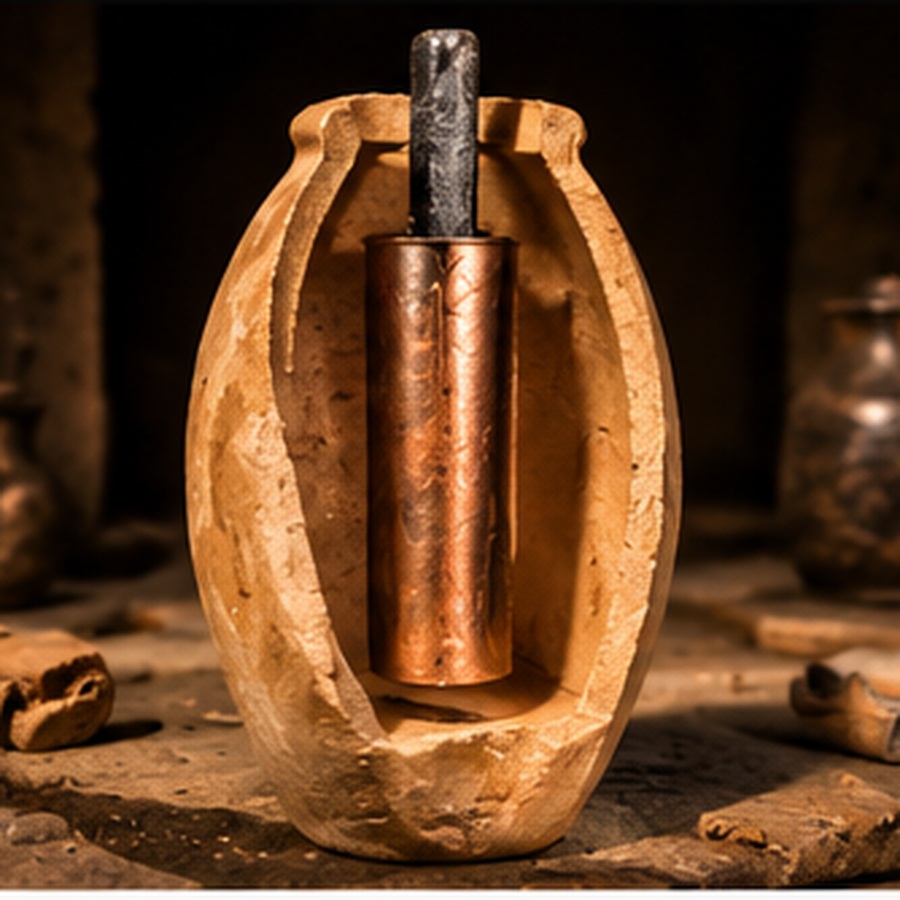
Baghdad Battery
What Was This Object Designed to Do?
The object popularly known as the Baghdad Battery presents a different kind of mystery. Rather than being monumental, it is deceptively ordinary: a ceramic vessel associated with a copper cylinder and an iron element. The arrangement led researchers to propose that, when filled with an acidic or otherwise conductive liquid, such a vessel could operate as a simple electrochemical cell. Modern reconstructions demonstrate the principle. Two different metals placed in an electrolyte can produce a measurable electrical potential, which explains why the object became famous as a possible example of ancient electrical technology.
However, experimental possibility is not the same thing as demonstrated ancient purpose. A replica's ability to generate voltage does not prove that electricity was what the original makers intended. Alternative explanations have included storage, ritual, or another practical function, and no complete ancient electrical system has been recovered that settles the question. This ongoing study is exactly why the artifact belongs in the Anomalies collection. The physical components are real, the electrochemical principle is real, but the proposed use remains under continued study. If its makers knowingly exploited an electrical effect, questions about plating, medicine, ritual sensation, or some unknown use become fascinating. Until supporting apparatus or documentary evidence is found, those possibilities must remain hypotheses.
| Artifact Type | Ceramic vessel associated with copper and iron components |
| Region | Mesopotamia / Iraq |
| Components | Ceramic jar, copper cylinder, and iron element |
| Possible Electrolyte | Unknown. Acidic liquids can make reconstructions produce a small voltage. |
| Electrical Potential | Demonstrated in modern replicas, depending on reconstruction and electrolyte |
| Ancient Wiring Found | No conclusive associated electrical distribution system |
| Electroplating | Frequently proposed, not conclusively demonstrated as the original purpose |
| Current Location / Custodian | Historically associated with the Iraq Museum, Baghdad. The present status of the famous original vessel is under study following disruption and looting surrounding the 2003 Iraq war, so this exhibit does not account that the original is currently on public display. |
| Original Function | under continued study |
| Museum Classification | Post-Flood technological anomaly |
| Biblical Connection | No direct biblical connection established |
| Evidence Rating | Authentic object type / battery interpretation under continued study |
Ceramic vessels with unusual metal components were documented archaeologically in Iraq, and reconstructed arrangements can produce an electrochemical potential.
The label "battery" is an interpretation of function rather than a surviving ancient description of the object.
No decisive evidence identifies the intended purpose of the vessel or demonstrates a wider ancient electrical technology.
No direct biblical connection is established. It is included as a Post-Flood technological question whose function remains legitimately under continued study.
07Exhibit 07Rapa Nui MoaiRapa Nui · Chile

Rapa Nui Moai
Quarry, Transport, Erection, and Ancestral Landscape
Rapa Nui, also known as Easter Island, preserves one of the most concentrated monumental sculptural landscapes on Earth. UNESCO estimates that roughly 900 moai survive across the island, together with more than 300 ceremonial platforms known as ahu. Most statues were carved from volcanic tuff at Rano Raraku, where unfinished figures remain attached to or partly freed from the quarry rock. The quarry preserves multiple stages of manufacture, making it possible to study the sequence from initial carving to final finishing.
The statues were not created by an unknown civilization. They are achievements of the Polynesian Rapa Nui culture. What makes them anomalous within this museum collection is the engineering and social organization required to carve large monoliths, move them across rugged terrain, raise them onto ceremonial platforms, and in some cases add separate red-scoria pukao above the head. The exact transport techniques used in every period are not preserved in written construction manuals, so modern researchers test competing reconstructions involving ropes, controlled rocking or "walking," sledges, prepared roads, and combinations of methods.
Orientation is also important. A common modern misconception is that all moai face the ocean. Many platform statues instead face inland toward the communities and landscapes with which they were associated. The statues are generally interpreted as representations of important ancestors. Their placement therefore combined monumentality with ancestry, community identity, ceremony, and the organization of inhabited space.
| Location | Rapa Nui, Easter Island, Chile |
| Cultural Context | Polynesian Rapa Nui culture |
| Monumental Period | Principally about the 10th through 16th centuries AD in UNESCO's World Heritage summary |
| Estimated Number of Moai | About 900 |
| Ceremonial Platforms | More than 300 ahu |
| Primary Material | Mostly volcanic tuff from Rano Raraku; some other volcanic stone types also occur |
| Height Range | UNESCO reports roughly 2 m to 20 m, including unfinished quarry examples |
| Largest Successfully Erected Moai | Paro, approximately 9.89 m high and about 82 metric tons, according to the Easter Island Statue Project |
| Orientation | Many ahu statues face inland toward former settlements rather than outward to sea |
| Transport | Ancient transport is certain; the exact method or combination of methods remains reconstructed from roads, archaeology, oral traditions, and experiments |
| Authenticity | Confirmed archaeological monuments |
| Museum Classification | Post-Flood monumental engineering anomaly |
| Biblical Connection | No direct biblical connection established |
| Evidence Rating | Strong archaeology / exact transport sequence reconstructed |
The statues, quarries, roads, ceremonial platforms, tools, and settlement landscape are genuine products of Rapa Nui culture.
The moai are widely interpreted as ancestral figures associated with lineage, authority, protection, and ceremonial life. Individual meanings varied through time and place.
No single surviving instruction tells us exactly how every statue was transported and erected, or why monumental production reached such extraordinary intensity on this remote island.
No direct connection is established. The exhibit belongs in the Post-Flood collection as evidence of large-scale human organization, engineering, and monumental ancestor culture.
Research Sources
- UNESCO World Heritage Centre, Rapa Nui National Park, World Heritage List No. 715.
- Easter Island Statue Project, field documentation and Moai Paro digital reconstruction.
- Archaeological research on Rano Raraku quarrying, statue roads, ahu, and experimental transport reconstructions.
08Exhibit 08Diquís Stone SpheresSouthern Costa Rica

Diquís Stone Spheres
Monumental Geometry in Pre-Columbian Costa Rica
In the Diquís Delta of southern Costa Rica, pre-Columbian chiefdom societies created large stone spheres and placed them within organized settlements containing artificial mounds, paved areas, structures, and burials. UNESCO's World Heritage property preserves four key archaeological sites: Finca 6, Batambal, El Silencio, and Grijalba-2. The associated cultural horizon is broadly dated to about AD 500 to 1500.
The spheres range from about 0.7 m to 2.57 m in diameter in the UNESCO property. They are remarkable not because every example is mathematically perfect, but because substantial stones were deliberately worked toward regular spherical form in large numbers and, at several protected sites, remain in or near archaeologically meaningful positions. Many other spheres were moved from their original contexts during agricultural development, landscaping, collecting, and looting, which makes the surviving in-situ examples especially valuable.
Their function is under continued study. Proposed roles have included status markers, territorial or ceremonial features, markers associated with important residences, astronomical alignments, and symbols of political authority. Some spheres occur in linear or geometric arrangements, but a proposed alignment should not automatically be labeled astronomical without a demonstrable target and archaeological context. The strongest evidence is the settlement relationship itself: these were intentionally produced monumental objects embedded within organized chiefdom landscapes.
| Location | Diquís Delta, southern Costa Rica |
| World Heritage Sites | Finca 6, Batambal, El Silencio, and Grijalba-2 |
| Cultural Period | Approximately AD 500–1500 |
| Diameter Range | About 0.7 m to 2.57 m within the UNESCO World Heritage property |
| Material | Various local stone types, including granodioritic and other igneous rocks depending on the sphere and source area |
| Original Context | Chiefdom settlements with mounds, paved areas, structures, and burials |
| Arrangement | Some preserved in linear or other deliberate groupings; many others lost their original archaeological context after being moved |
| Transport | The spheres were moved and deliberately positioned within ancient settlements. The precise methods used to transport the largest examples have not been conclusively established. |
| Purpose | under continued study; social, ceremonial, territorial, and political interpretations have been proposed |
| Astronomical Alignment | Proposed for some arrangements, not established as a universal explanation |
| Authenticity | Confirmed archaeological monuments |
| Museum Classification | Post-Flood geometric and monumental anomaly |
| Biblical Connection | No direct biblical connection established |
| Evidence Rating | Strong archaeological context / original meaning under continued study |
The spheres are authentic pre-Columbian objects associated with complex chiefdom settlements in southern Costa Rica.
Their social and ceremonial roles are reconstructed from placement, settlement hierarchy, associated architecture, and regional archaeology.
No surviving text identifies the precise symbolic meaning of the spheres or explains why spherical geometry became such a distinctive regional tradition.
No direct connection is established. Their value to the museum is comparative: they document sophisticated stone shaping and organized monumental landscapes in the Post-Flood Americas.
Research Sources
- UNESCO World Heritage Centre, Precolumbian Chiefdom Settlements with Stone Spheres of the Diquís, World Heritage List No. 1453.
- Costa Rican archaeological research on Finca 6, Batambal, El Silencio, Grijalba-2, sphere manufacture, and settlement organization.
09Exhibit 09Antikythera MechanismAntikythera · Greece
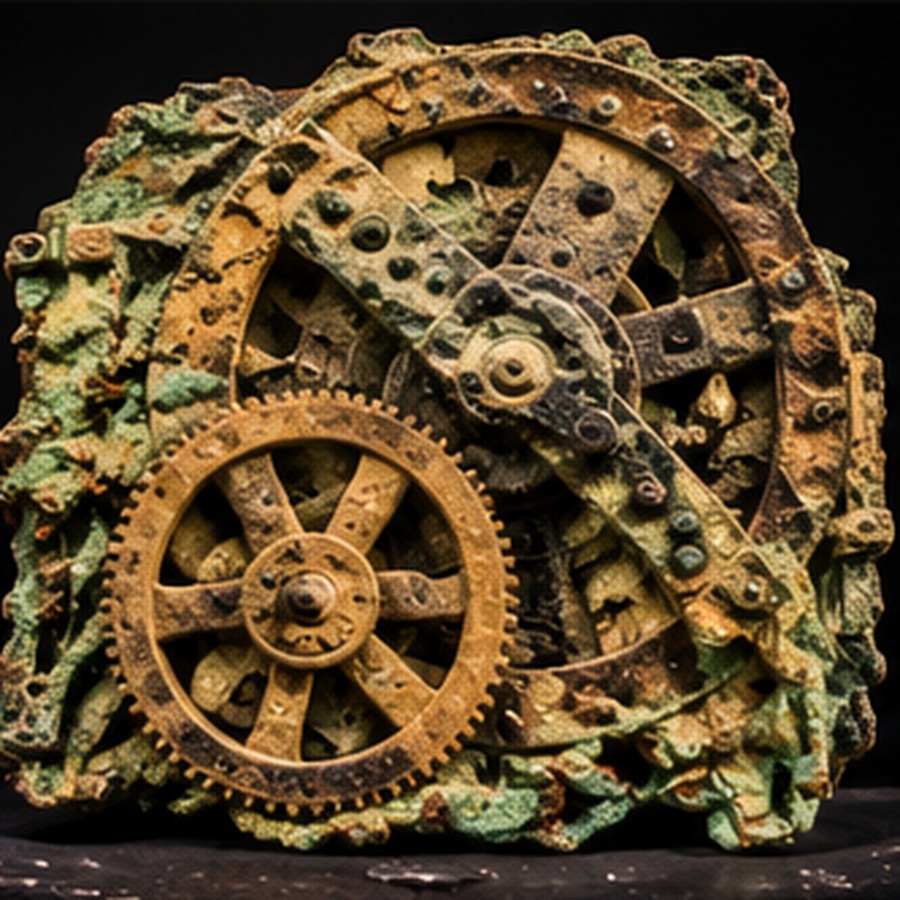
Antikythera Mechanism
A Geared Model of Astronomical Time
The Antikythera Mechanism is an ancient Greek geared astronomical calculator recovered from a shipwreck off the island of Antikythera. The wreck was discovered in 1900 and investigated in 1900–1901. The National Archaeological Museum of Greece dates creation of the mechanism broadly to about 150–100 BC, with the shipwreck around 70 BC. The surviving device is fragmented and corroded, but X-ray tomography and high-resolution surface imaging have revealed a dense system of bronze gears, scales, pointers, and inscriptions.
The mechanism modeled astronomical and calendrical cycles mechanically. Research has demonstrated a 19-year Metonic calendar cycle, a 223-lunar-month Saros eclipse cycle, an Exeligmos correction cycle, and displays connected with lunar motion and calendrical organization. Nature's 2006 reconstruction identified at least 30 surviving bronze gear wheels and showed that the mechanism could predict lunar and solar eclipses using established astronomical cycles. Later research identified an Olympiad-related dial and additional calendar information.
The anomaly is historical rather than supernatural. The machine demonstrates that Hellenistic engineers could embody sophisticated mathematical astronomy in compact geared hardware. Comparable geared mechanisms from the same period have not survived in sufficient numbers to show how common the technology was. The object therefore forces historians to distinguish between what ancient engineers demonstrably knew and what happens to technological traditions when most examples are lost.
| Artifact Type | Geared astronomical and calendrical calculator |
| Culture | Ancient Greek / Hellenistic |
| Creation Date | About 150–100 BC according to the National Archaeological Museum of Greece |
| Shipwreck | About 70 BC |
| Discovery | Antikythera shipwreck, identified in 1900; major recovery campaign 1900–1901 |
| Material | Bronze gearing and plates, originally housed in a wooden case |
| Known Gear Wheels | At least 30 surviving gear wheels identified in major published reconstructions |
| Demonstrated Functions | Lunisolar calendar, lunar motion, eclipse prediction, Metonic and Saros cycles, and associated calendrical displays |
| Current Custodian | National Archaeological Museum, Athens, Greece |
| Authenticity | Confirmed archaeological artifact from the Antikythera shipwreck |
| Museum Classification | Post-Flood technological and astronomical anomaly |
| Biblical Connection | No direct biblical connection established |
| Evidence Rating | Exceptional artifact / many functions reconstructed from physical gearing and inscriptions |
The surviving fragments contain complex bronze gearing and inscriptions encoding astronomical and calendrical cycles.
Researchers reconstruct missing portions of the gear trains and displays from surviving teeth counts, inscriptions, astronomical requirements, imaging, and mechanical constraints.
The exact workshop, maker, ownership history, complete front display, and prevalence of comparable mechanisms in the ancient world remain under study.
No direct biblical connection is established. It documents the high level of astronomy, mathematics, and mechanical engineering present in the Hellenistic Post-Flood world.
Research Sources
- National Archaeological Museum of Greece, The Mysteries of the Mechanism of Antikythera, chronology, structure, and astronomical functions.
- Freeth, T. et al., “Decoding the ancient Greek astronomical calculator known as the Antikythera Mechanism,” Nature 444 (2006).
- Freeth, T. et al., “Calendars with Olympiad display and eclipse prediction on the Antikythera Mechanism,” Nature 454 (2008).
10Exhibit 10Dead Sea ScrollsQumran · Judean Desert
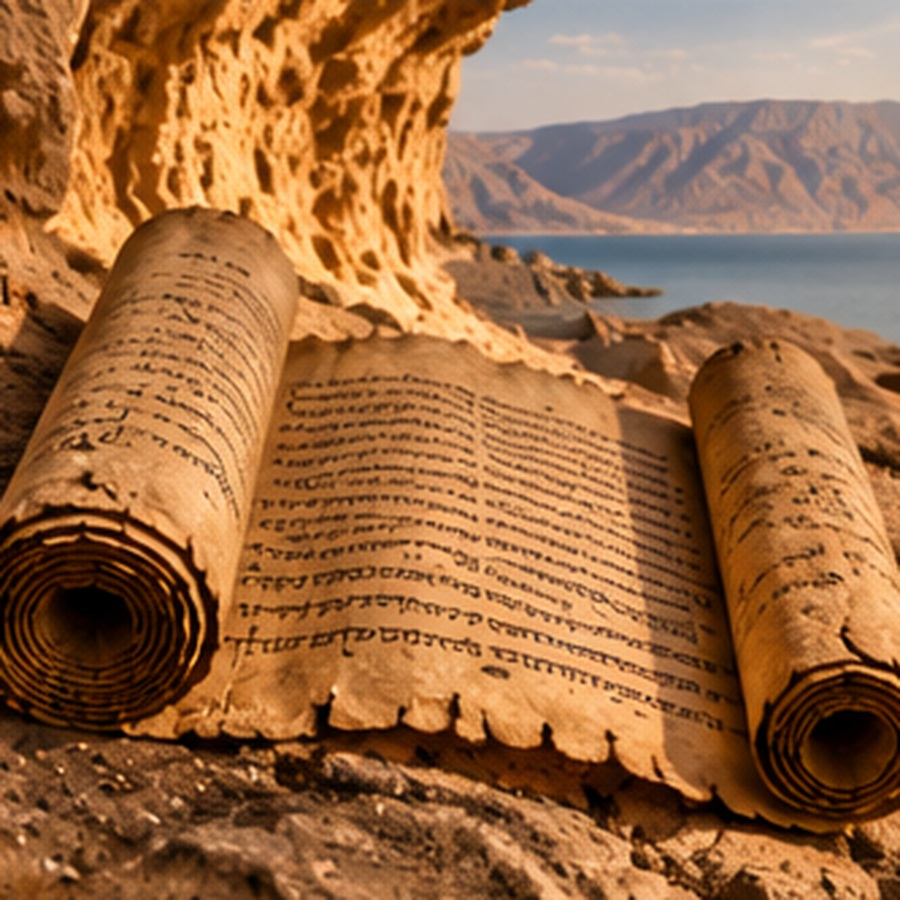
Dead Sea Scrolls
Voices Preserved in the Desert
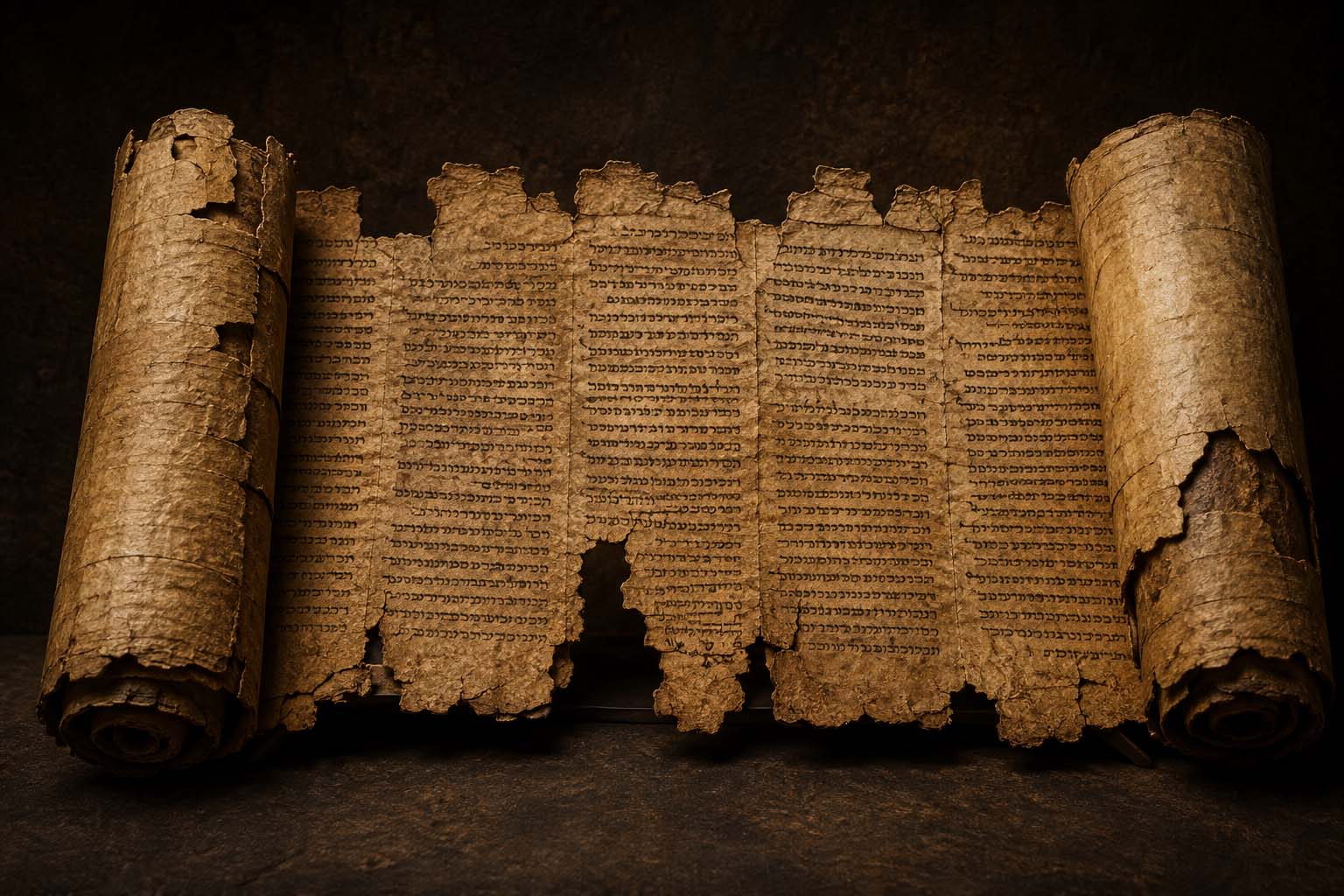
The Discovery
The modern story of the Dead Sea Scrolls begins in the rugged limestone cliffs northwest of the Dead Sea. In 1947, Bedouin shepherds of the Ta'amireh tribe were tending sheep and goats near Qumran. According to the traditional discovery account preserved by the Israel Antiquities Authority, a young shepherd searching for a stray animal noticed a cave opening and threw a stone into the darkness. Instead of hearing only the strike of stone against rock, he heard pottery breaking. When the cave was investigated, tall clay jars were found inside. Most were empty, but some contained ancient scrolls, several wrapped in linen and blackened by age.
The shepherds could not have known what they had encountered. The first cache ultimately produced seven major scrolls. The manuscripts moved through the antiquities market around Bethlehem, where Khalil Eskander Shahin, known as Kando, became an important intermediary. Four of the scrolls eventually reached Mar Athanasius Yeshue Samuel of the Syrian Orthodox Church in Jerusalem. Three others were acquired by archaeologist Eliezer Lipa Sukenik for the Hebrew University. The story later crossed the Atlantic: Samuel's four scrolls were taken to the United States and advertised for sale in 1954. Archaeologist Yigael Yadin, Sukenik's son, arranged their purchase on behalf of Israel. The original seven scrolls were eventually brought together and became central treasures associated with the Shrine of the Book at the Israel Museum in Jerusalem.
The Search Expands
Once scholars understood the significance of the first cave, the cliffs surrounding Qumran became the focus of an intense search by Bedouin and archaeological teams. From 1949 through 1956, written remains were recovered from ten additional caves near Qumran. Cave 4 produced the richest concentration, including roughly 15,000 fragments representing hundreds of manuscripts. What began as seven scrolls had become an ancient manuscript library consisting of near-complete works, partial manuscripts, and tens of thousands of fragments that scholars would spend decades identifying, conserving, joining, translating, and publishing.
What Was Preserved?
The collection is not a single book and not exclusively a collection of biblical manuscripts. It preserves copies of books from the Hebrew Scriptures alongside biblical commentaries, prayers, hymns, legal texts, community regulations, apocalyptic writings, and other Jewish literature. Hebrew and Aramaic predominate, with Greek also represented. Manuscripts or fragments preserve material from Genesis, Exodus, Leviticus, Numbers, Deuteronomy, Isaiah, Psalms, Samuel, Jeremiah, and many other biblical books. The caves also preserved works such as Jubilees and Enoch, demonstrating that these writings circulated within ancient Jewish literary communities.
Enoch, the Watchers, and the Book of Giants
For Archoseum, one part of the manuscript corpus is especially important. Qumran preserved Aramaic fragments associated with Enochic literature and with a work known today as the Book of Giants. The Israel Antiquities Authority's digital archive identifies fragments such as 1Q23, 1Q24, and 2Q26 as manuscripts of the Enochic Book of Giants. These are genuine ancient manuscript fragments, not later medieval inventions. Their existence demonstrates that traditions concerning the Watchers and giants circulated in ancient Jewish literature.
This evidence must be stated carefully. The manuscripts do not constitute archaeological proof that giants physically existed, nor do they prove every narrative detail contained in Enochic literature. What they establish is historically significant in its own right: traditions expanding upon the world associated with Genesis 6 were already present within ancient Jewish manuscript culture. That gives the museum a physical documentary bridge between the brief biblical passage concerning the sons of God and Nephilim and the broader Watchers and giants traditions preserved in ancient Jewish writings.
The Great Isaiah Scroll
Among the first discoveries was the Great Isaiah Scroll, one of the most celebrated manuscripts from Cave 1. It preserves virtually the entire Book of Isaiah and gave scholars an extraordinarily early Hebrew witness with which to compare later manuscript traditions. The importance of that comparison is more nuanced than saying that every surviving word is identical. The scrolls preserve spelling differences, scribal variations, and textual differences. At the same time, they reveal substantial continuity in the transmission of biblical literature across a very long period of manuscript history.
That combination is precisely why the scrolls matter. They allow the biblical text to be studied materially rather than merely assumed. Ink, parchment, handwriting, corrections, textual variants, and scribal practices can all be examined. The discovery did not uncover an unrecognizable Hebrew Bible. It opened a much earlier window into how biblical texts were copied, read, preserved, and transmitted.
Why Were the Scrolls Hidden?
No surviving note explains exactly why every manuscript was placed in the caves. A prominent historical interpretation connects at least some deposits with the instability surrounding the Jewish revolt against Rome and the danger that eventually reached the Qumran region. Manuscripts may have been concealed for protection as conflict approached. The nearby settlement has traditionally been associated with the Essenes, although the exact relationship among the settlement, the manuscript owners, scribes, and cave deposits continues to be discussed by scholars.
Whoever placed the manuscripts in the caves considered them worth preserving. Whether those people expected to return for them is unknown. They did not. The arid environment and protected caves instead preserved portions of the library until its accidental rediscovery many centuries later.
Where Are They Now?
The Dead Sea Scrolls are not housed in one single collection. The first seven major scrolls are entrusted to the Israel Museum in Jerusalem, where major examples are associated with the Shrine of the Book. The majority of the fragments recovered by archaeologists and Bedouin are under the custody of the Israel Antiquities Authority. Other manuscript material is held by institutions outside Israel, including collections in Jordan and France, as well as some private collections. The Shrine of the Book remains one of the principal public locations associated with the discovery.
| Artifact Type | Ancient manuscript collection |
|---|---|
| Discovery Region | Judean Desert, northwest shore of the Dead Sea |
| Primary Site | Qumran |
| Initial Discovery | 1947 |
| Discoverers | Bedouin shepherds of the Ta'amireh tribe |
| Initial Cache | Seven major scrolls |
| Qumran Manuscript Caves | Eleven caves containing written remains |
| Materials | Primarily parchment and papyrus; the separate Copper Scroll is made of copper |
| Languages | Predominantly Hebrew and Aramaic, with Greek also represented |
| Biblical Material | Manuscripts and fragments from the Hebrew Scriptures |
| Other Literature | Enoch, Jubilees, community texts, commentaries, hymns, legal and apocalyptic writings |
| Giants Material | Aramaic fragments of the Book of Giants and related Enochic traditions |
| Major Manuscript | Great Isaiah Scroll |
| Current Custody | Israel Museum, Israel Antiquities Authority, and other institutional and private collections |
| Major Public Repository | Shrine of the Book, Israel Museum, Jerusalem |
| Authenticity | Confirmed archaeological manuscript corpus |
| Museum Classification | Post-Flood Biblical & Transitional Evidence |
| Biblical Significance | Exceptional |
| Evidence Rating | CONFIRMED MANUSCRIPT DISCOVERY |
Ancient Hebrew, Aramaic, and Greek manuscripts were recovered from caves in the Judean Desert, including biblical books and noncanonical Jewish literature. The corpus includes genuine fragments identified as the Enochic Book of Giants.
The identity of the community responsible for assembling, copying, owning, and hiding the manuscripts continues to be studied. Qumran has long been associated with the Essenes, but not every aspect of that reconstruction is settled.
Exactly why particular manuscripts were distributed among particular caves, who deposited every collection, and whether the owners expected to retrieve them cannot presently be established.
Exceptional. The collection provides ancient manuscript evidence for the Hebrew Scriptures while also documenting ancient Jewish traditions concerning Enoch, the Watchers, and giants.
11Exhibit 11Copper ScrollQumran · Judean Desert
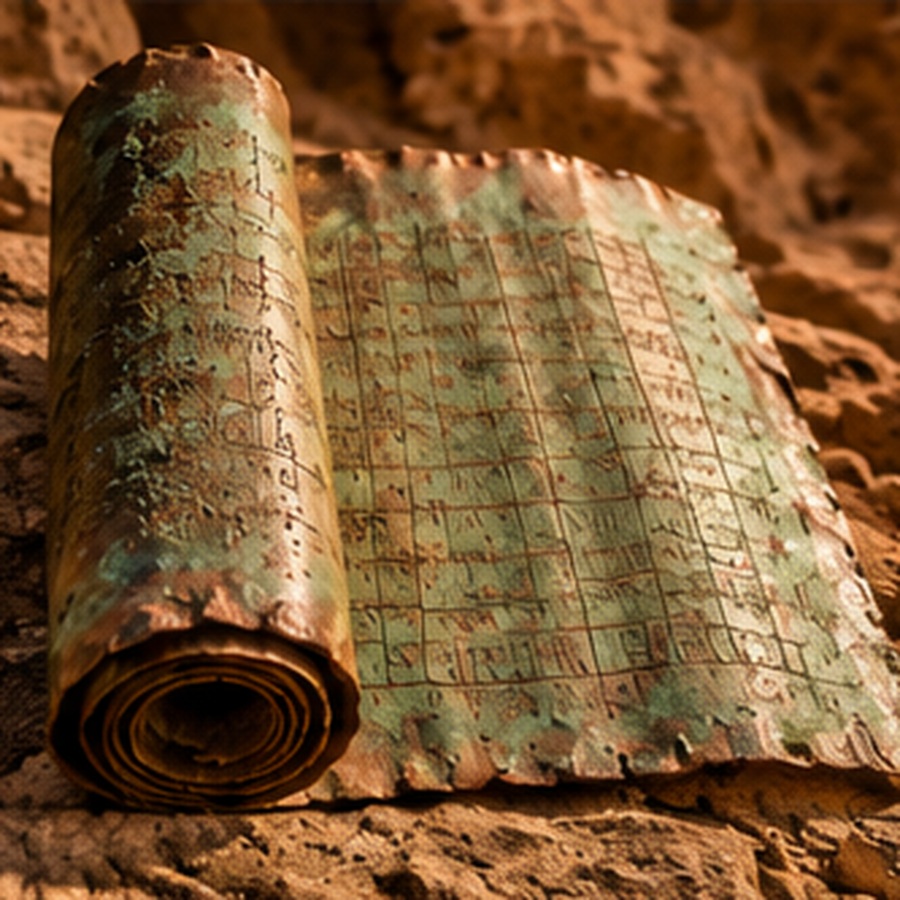
Copper Scroll
A Treasure List Written in Metal
Found in Cave 3
In 1952, archaeologists exploring Cave 3 at Qumran encountered something unlike the parchment and papyrus manuscripts being recovered elsewhere in the Judean Desert. At the back of the cave were two heavily corroded rolls of metal, portions of what had originally been a single document. The manuscript is now designated 3Q15, identifying it as manuscript 15 from Qumran Cave 3. Its Hebrew text was not written in ink. The characters were incised directly into thin sheets of copper.
That material immediately separates the Copper Scroll from the rest of the Qumran manuscript corpus. Producing a text on metal required considerably more effort than writing on parchment or papyrus, suggesting that the information was intended to endure. The original joined sheet has been reconstructed at roughly 2.4 meters long and about 30 centimeters high. Corrosion preserved the writing imperfectly, but enough survived for the document to be read once specialists found a way to open it safely.
The Scroll That Could Not Be Unrolled
Centuries of corrosion had made the copper so brittle that conventional unrolling risked destroying the manuscript. The two rolls therefore remained largely unreadable while specialists considered how to separate the layers. In the mid-1950s, arrangements were made for the scroll to be taken to Manchester, England. There, engineer H. Wright Baker developed a method of cutting the rolls into narrow sections rather than attempting to force them open. The work was carried out in 1955 and 1956.
As the sections were separated, scholars discovered that the text was not a biblical book, hymn, commentary, or community rule. It appeared instead to contain directions to concealed valuables. The document reads much more like an inventory than a literary story: a location is named, a direction or measurement is sometimes supplied, valuables are listed, and then the text moves to another location.
Sixty-Four Hiding Places
The Copper Scroll contains a sequence of approximately 64 entries describing places where treasure or valuable materials were supposedly hidden. The entries refer repeatedly to gold, silver, vessels, and other valuables. Some provide distances or clues involving tombs, cisterns, channels, ruins, valleys, and built features. To the original writer, these descriptions may have identified recognizable landmarks. To modern investigators, many of them are frustratingly vague because the landscape and place names have changed dramatically.
The final entry adds another layer to the mystery by referring to an additional copy or inventory containing further information. Exactly how this statement should be interpreted continues to be studied, but it raises the possibility that a more detailed companion record once existed. If such a document survived antiquity, its present location is unknown.
How Much Treasure?
The quantities described in the Copper Scroll are enormous if translated literally. The text repeatedly uses ancient measures for precious metal, traditionally rendered in terms such as talents. Taken at face value, the combined value would have represented a staggering concentration of wealth. That immediately raises the question of ownership. Who possessed enough gold and silver to justify a metal inventory and dozens of concealed caches?
Several possibilities have been proposed. Some researchers have suggested wealth connected with the Jerusalem Temple, concealed during political crisis or before Roman forces destroyed Jerusalem. Others have proposed property associated with the community connected to Qumran or valuables gathered from multiple sources. Still others have questioned whether every number should be interpreted literally. The Copper Scroll itself does not identify the owner conclusively.
Was the Treasure Ever Found?
No generally accepted discovery has been demonstrated to correspond conclusively with one of the Copper Scroll's treasure deposits. John Marco Allegro, one of the scholars closely involved with the scroll, believed the treasure was real and took part in searches for several proposed locations. Those efforts did not produce a verified recovery that could be tied securely to 3Q15.
The geographical problem is formidable. Directions that may once have been obvious can become useless after centuries of warfare, rebuilding, erosion, excavation, altered water systems, destroyed tombs, and lost place names. A phrase such as “beneath the steps” is meaningful only if the correct steps still exist and can be identified. The treasure might have been recovered in antiquity, destroyed, dispersed, or remain hidden. Present evidence cannot decide among those possibilities.
Could It Be Temple Treasure?
The possible connection with the Jerusalem Temple is one of the most intriguing interpretations, but it must remain explicitly labeled as a hypothesis. The Second Temple world certainly possessed precious metals, sacred vessels, offerings, and stored wealth. In periods of invasion, safeguarding such property would have been an urgent concern. Because the Copper Scroll belongs to the Jewish world of the Roman period and lists extensive hidden valuables, researchers have naturally asked whether some of those deposits could have been connected with Jerusalem or Temple property.
The evidence does not justify identifying the Copper Scroll as a proven inventory of Temple treasure, and it does not securely identify the location of the Ark of the Covenant. Those accounts go beyond what the surviving text can establish. The responsible museum question is narrower: could some of the treasure have originated within the Jerusalem Temple economy? At present, that remains an under continued study possibility.
Why Write It on Copper?
One of the simplest questions may be among the most important. If this were an ordinary document, parchment or papyrus would have been dramatically easier to prepare and inscribe. Instead, someone chose metal. Incising line after line of Hebrew into copper required planning, specialized labor, and persistence. The choice suggests that durability mattered, although the exact reason cannot be recovered from the text itself.
Ironically, the decision succeeded. The copper became badly corroded and difficult to open, yet the incised characters survived sufficiently for modern scholars to recover much of the document. The medium therefore preserved the record long after whatever landmarks and caches it described had vanished from common memory.
Where Is It Today?
The original Copper Scroll remains in Jordanian museum custody in Amman. High-resolution documentation of manuscript 3Q15 is also maintained within the Israel Antiquities Authority's Leon Levy Dead Sea Scrolls Digital Library. Its provenance is unusually strong for an anomalous artifact: it was recovered archaeologically from Qumran Cave 3, conserved and opened under specialist supervision, published, studied, and preserved in institutional custody.
The remarkable ongoing study therefore does not concern whether the artifact exists. The Copper Scroll survives. The unanswered question concerns the objects it describes.
| Artifact | Copper Scroll |
|---|---|
| Manuscript Designation | 3Q15 |
| Artifact Type | Inscribed metal manuscript / treasure inventory |
| Discovery Site | Cave 3, Qumran |
| Discovery Region | Judean Desert |
| Discovered | 1952 |
| Material | Copper |
| Language | Hebrew |
| Script | Square Hebrew script |
| Original Form | Two surviving rolls belonging to one document |
| Reconstructed Length | Approx. 2.4 m / 7.9 ft |
| Text Structure | Twelve columns |
| Listed Locations | Approximately 64 |
| Contents Described | Gold, silver, vessels, and other valuables |
| Biblical Text? | No |
| Dead Sea Scroll? | Yes, part of the Qumran manuscript discoveries |
| Opening Method | Carefully cut into sections in Manchester, 1955–1956 |
| Treasure Recovered? | No treasure has been conclusively identified with the list |
| Possible Ownership | under continued study |
| Temple Connection | Proposed, not established |
| Current Custody | Jordanian museum custody, Amman |
| Authenticity | Confirmed archaeological artifact |
| Museum Classification | Post-Flood Historical / Archaeological Anomaly |
| Evidence Rating | CONFIRMED DOCUMENT / TREASURE under continued study |
The Copper Scroll is an authentic archaeological manuscript recovered from Qumran Cave 3. Its Hebrew text was incised into copper and consists of a systematic sequence of entries describing locations and valuables.
The document is generally interpreted as some form of treasure inventory. Who produced it, who owned the wealth, and whether every quantity should be taken literally continue to be studied.
No accepted discovery has conclusively identified the treasure described by the scroll. The original landmarks have not been securely reconstructed, and the reason this particular record was written on copper remains under study.
Contextually significant. The scroll belongs to the Jewish world of the Second Temple period and raises the possibility that some concealed wealth could have been associated with Jerusalem or Temple property. That connection remains a hypothesis.
12Exhibit 12Aztec Sun StoneCentral Mexico
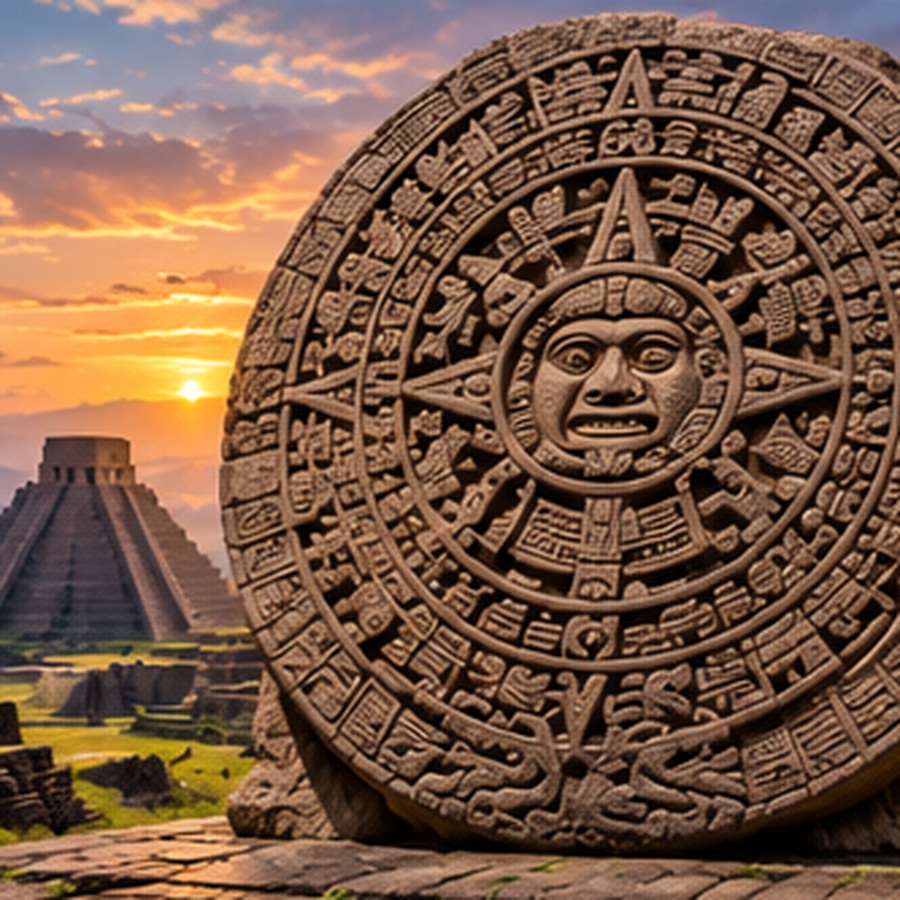
Aztec Sun Stone
Time, the Five Suns, and the Order of the Cosmos
The Object Commonly Called the Aztec Calendar
The monument popularly known as the Aztec Calendar Stone is more accurately called the Sun Stone or Piedra del Sol. It was created by the Mexica civilization of central Mexico and is one of the most recognizable surviving monuments from the world of Tenochtitlan. Although calendrical information is carved into its surface, it is not simply a giant calendar for looking up dates. The stone combines concepts of ritual time, solar cycles, cosmic history, political power, sacrifice, and the ordered structure of the Mexica universe.
The original monument is enormous. It measures approximately 3.58 meters, or 11.7 feet, in diameter and about 98 centimeters, or 3.2 feet, thick. The Instituto Nacional de Antropología e Historia describes its weight as approximately 24 metric tons. Its scale matters. The Sun Stone was not a portable astronomical instrument. It was a monumental public object whose imagery was meant to communicate an entire cosmic system in stone.
Dimensions & Scale. The Sun Stone is approximately 11.7 feet across and 3.2 feet thick. The 5-foot-6-inch silhouette provides the museum's standard human scale reference.
When Was It Made?
The exact construction date deserves careful treatment. The stone contains the date sign 13 Reed. The Instituto Nacional de Antropología e Historia interprets this as AD 1479 and associates completion of the monument with the reign of the Mexica ruler Axayacatl. Other art-historical treatments date the surviving monument more broadly to the reign of Moctezuma II, approximately AD 1502 to 1520. Because these interpretations differ, the museum does not present a single under continued study year as certain.
What can be stated securely is that the Sun Stone belongs to the Late Postclassic Mexica world immediately before the Spanish conquest of Tenochtitlan in AD 1521.
The Face at the Center
At the center of the composition is a powerful face surrounded by the sign Nahui Ollin, or Four Movement. The central figure has traditionally been identified as Tonatiuh, the sun deity, although scholars have under continued study aspects of the identification and symbolism. The image belongs to the Mexica concept of the present cosmic age, commonly called the Fifth Sun.
According to Mexica cosmology, the present world was preceded by earlier cosmic eras. Around the center appear signs associated with four previous Suns, each understood to have ended in catastrophe. The monument therefore presents time not merely as a sequence of days, but as an ordered succession of worlds, destruction, renewal, and the precarious continuation of the present age.
The Twenty Day Signs
One of the most clearly calendrical features is the ring of 20 day signs surrounding the central imagery. These signs belong to the tonalpohualli, the 260-day ritual calendar formed by combining 20 named day signs with a repeating sequence of 13 numbers. The result is 260 distinct day combinations before the complete sequence repeats.
The Mexica also used a 365-day solar cycle known as the xiuhpohualli. The interaction of calendrical cycles helped structure ritual observance, naming, divination, festivals, state ceremonies, and the larger conception of recurring time.
The Outer Rings and Fire Serpents
The imagery becomes increasingly complex toward the perimeter. Additional bands contain symbols connected with solar rays, precious elements, calendrical divisions, and cosmic order. Near the outer edge are two enormous Xiuhcoatl, or fire serpents, whose bodies frame the composition. Their heads meet near the bottom of the disk, helping transform the monument from a simple diagram into a dynamic image of solar and cosmic power.
The exact interpretation of every carved element is not universally agreed upon. That ongoing study is important. The Sun Stone is highly structured and clearly meaningful, but modern labels cannot recover every association that an educated Mexica priest or ruler may have understood immediately.
Was It Originally Painted?
The stone now appears as exposed volcanic rock, but monuments of this type were not necessarily intended to remain visually monochrome. Art historians note that the Sun Stone was originally painted. Color would have separated figures and signs much more strongly than the weathered surface seen today, making the monument even more visually complex in its original setting.
Calendar, Monument, or Sacrificial Stone?
The popular name “Calendar Stone” can give the wrong impression that its primary purpose was simply to keep track of the year. Researchers have proposed a more complex ceremonial function. Its iconography links calendrical time with the Sun, cosmic eras, and sacrifice. INAH notes that the object may also have functioned as a ritual platform associated with sacrificial activity or solar offerings.
Its original orientation remains important to that discussion. A monument of this size could have been displayed vertically, horizontally, or incorporated into a ceremonial setting in ways different from its modern museum presentation. The precise original use is therefore not completely settled.
Buried After the Fall of Tenochtitlan
The Sun Stone disappeared from public view after the Spanish conquest. On December 17, 1790, workers remodeling and leveling the Plaza Mayor of Mexico City uncovered the massive monument near the ancient ceremonial heart of Tenochtitlan. It was found with its carved face downward, suggesting that it had been displaced from its original position and buried after the conquest.
The discovery immediately attracted attention. Instead of being destroyed, the monument was eventually displayed against the western tower of Mexico City's Metropolitan Cathedral, where it remained visible for decades. It later entered Mexico's national collections and is now one of the signature objects of the Museo Nacional de Antropología in Mexico City.
What Makes It an Anomaly?
The anomaly is not that the Sun Stone requires unknown machinery or a lost civilization to explain it. Its makers were the historical Mexica. The extraordinary feature is the density of organized information carved into a 24-ton monument: multiple calendrical signs, mythic eras, cosmic direction, solar symbolism, ritual meaning, and political theology were integrated into one coherent visual system.
Its sophistication raises a legitimate historical question without requiring exploration: how much accumulated observation, priestly training, mathematical reckoning, artistic planning, and cultural memory was necessary before a civilization could encode its conception of time and the universe at this monumental scale?
| Artifact | Sun Stone / Piedra del Sol |
|---|---|
| Popular Name | Aztec Calendar Stone |
| Culture | Mexica, commonly called Aztec |
| Origin | Tenochtitlan, present-day Mexico City |
| Period | Late Postclassic |
| Date | under continued study. The carved 13 Reed date is interpreted by INAH as AD 1479; other art-historical dating places the monument in the reign of Moctezuma II, AD 1502–1520. |
| Material | Volcanic stone, commonly described as basalt |
| Diameter | Approx. 3.58 m / 11.7 ft |
| Thickness | Approx. 98 cm / 3.2 ft |
| Weight | Approx. 24 metric tons |
| Central Motif | Nahui Ollin, Four Movement; central face traditionally identified with Tonatiuh |
| Cosmic Framework | Present Fifth Sun surrounded by symbols associated with four previous cosmic eras |
| Calendrical Feature | Twenty day signs of the 260-day tonalpohualli ritual calendar |
| Outer Imagery | Solar motifs, calendrical elements, and paired Xiuhcoatl fire serpents |
| Original Color | Believed to have been painted |
| Discovered | December 17, 1790 |
| Discovery Location | Plaza Mayor, Mexico City, over the ceremonial center of former Tenochtitlan |
| Condition at Discovery | Recovered with carved relief facing downward |
| Possible Function | Cosmological and calendrical monument; possible ceremonial or sacrificial platform |
| Current Location | Museo Nacional de Antropología, Mexico City |
| Direct Biblical Connection | None established |
| Museum Classification | Post-Flood Historical / Cosmological Anomaly |
| Evidence Rating | CONFIRMED MONUMENT / FUNCTION PARTLY under continued study |